Menu


TL;DR:
- Grandparents in New Hampshire can petition for visitation or custody only if their contact benefits the child’s best interests and would prevent harm.
- Their rights are conditional and require substantial evidence to overcome parental rights protected under the Troxel precedent, which defers to fit parents.
Grandparents in New Hampshire hold limited but legally meaningful rights to seek visitation or custody of their grandchildren, and the role of grandparents for custody cases in New Hampshire is defined by specific statutes and court standards that every grandparent should understand before taking action. Under RSA 461-A:13, the state grants grandparents the ability to petition for visitation, but only when contact serves the child’s best interests and denial would cause the child harm. Courts do not treat grandparent rights as automatic. You must meet a high legal standard, and knowing exactly what that standard requires is the first step toward protecting your relationship with your grandchild.
The legal role of grandparents in New Hampshire custody cases is defined as a conditional right to petition, not a guaranteed entitlement. Grandparents do not have automatic rights; they must file petitions and convince the court that visitation or custody serves the child’s best interests. That distinction matters enormously when you are planning your next step.

New Hampshire law places parental rights at the top of the legal hierarchy. The U.S. Supreme Court’s decision in Troxel v. Granville established that fit parents have a constitutional right to decide who has contact with their children. Courts defer to fit parents on grandparent access, which means grandparents must overcome that presumption with clear, credible evidence. This is not a system designed to exclude grandparents. It is a system designed to protect children, and grandparents who can show their involvement benefits the child have a real path forward.
RSA Chapter 461-A governs custody and visitation in New Hampshire. Within that framework, grandparents occupy a recognized but secondary position. The court considers the child’s relationship with grandparents as one factor among many in a broader best-interests analysis. Understanding where you fit within that framework is the foundation of any successful petition.
Grandparents gain legal standing to petition in specific circumstances. Standing arises when parents divorce, when one parent dies, when parental rights are terminated, or when an established grandparent-grandchild relationship is unreasonably severed by a parent. You cannot petition simply because you disagree with a parent’s choices. The law requires a concrete disruption to a pre-existing relationship.
To file a successful petition, you must demonstrate two things: a substantial pre-existing relationship with your grandchild, and that maintaining contact serves the child’s best interests. Courts in New Hampshire also require proof that denying visitation would result in harm to the child. That harm standard makes New Hampshire more restrictive than many other states, so your evidence must be specific and well-documented.
Common situations where grandparent petitions succeed include:
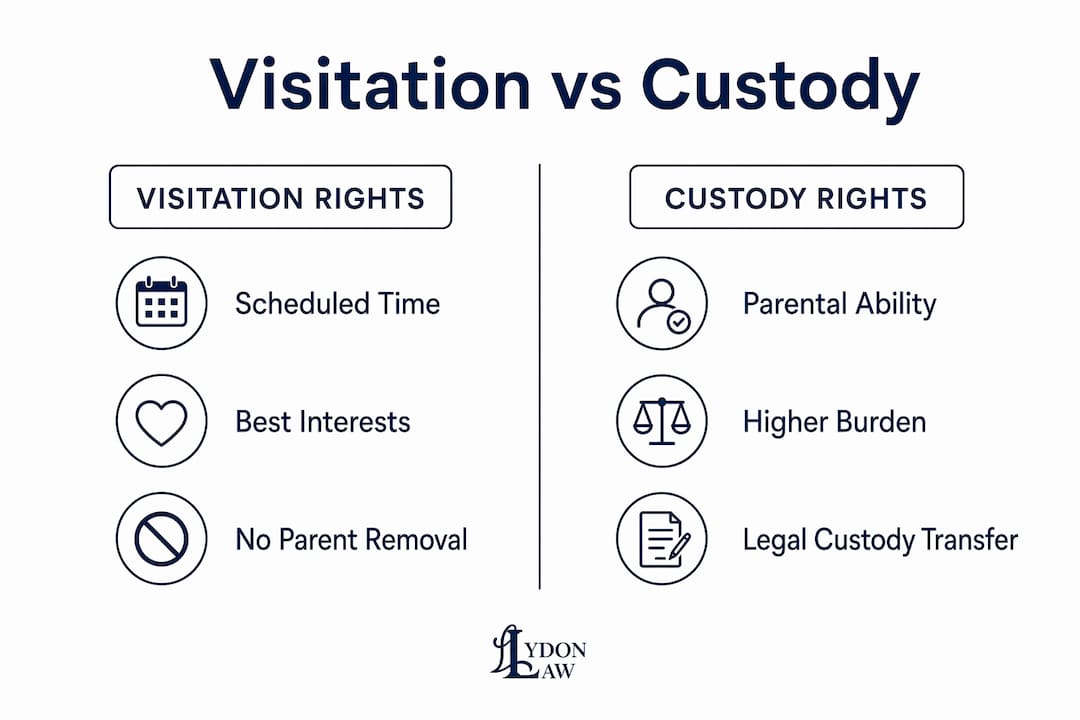
Custody petitions carry a higher burden than visitation petitions. Custody requires proof that parents are unable or unwilling to care for the child, and courts treat it as an exceptional remedy because it displaces parental rights entirely.
Pro Tip: Before filing any petition, document your existing relationship in writing. A journal of visits, caregiving activities, and communications with the child strengthens your standing argument from day one.
New Hampshire courts apply the “best interests of the child” standard when evaluating grandparent petitions, and that standard is more demanding for grandparents than it is for parents. Judges review a range of factors under RSA Chapter 461-A, including the child’s emotional and developmental needs, the quality of the grandparent-grandchild relationship, and the potential harm from severing that relationship.
The table below summarizes the key factors courts weigh in grandparent petitions and why each one matters.
| Court Factor | Why It Matters |
|---|---|
| Quality of grandparent-grandchild relationship | Demonstrates the emotional bond the court is being asked to protect |
| History of caregiving involvement | Shows the grandparent has played a functional role in the child’s daily life |
| Potential harm from loss of contact | Satisfies NH’s harm standard, which is required for visitation to be granted |
| Parental fitness and decision-making | Courts defer to fit parents, so parental fitness directly limits grandparent rights |
| Child’s own preferences | Older children’s preferences carry weight, especially in contested cases |
| Grandparent’s support for parent-child relationship | Courts favor grandparents who reinforce rather than undermine parental authority |
The Troxel v. Granville precedent shapes every step of this analysis. Because fit parents receive substantial judicial deference, you must show more than a loving relationship. You must show that the absence of your involvement causes measurable harm to the child. That is a concrete legal threshold, not a general impression.
Courts look favorably on grandparents who actively support the parent-child relationship rather than compete with it. If your petition signals conflict with the parent, it weakens your case. If it signals cooperation and child-centered motivation, it strengthens it.
Pro Tip: Ask your attorney to help you frame your petition around the child’s needs, not your own. Judges respond to evidence of the child’s well-being, not grandparent grievances.
Strong evidence of stable care, a substantial emotional bond, and documented potential harm from disruption are the three pillars of a persuasive grandparent petition. You can learn more about building a strong custody case in New Hampshire courts, but the core principles apply directly to grandparent situations.
The most persuasive petitions document day-to-day involvement and articulate specific harms expected if the relationship is severed. Generic claims about love and family bonds rarely move courts. Specific, documented evidence does.
Here is what to gather before filing:
Beyond documentation, how you present yourself in court matters. Grandparent involvement in daily care and demonstrated support for the parent-child relationship are significant positive factors. Courts want to see that you are adding stability to the child’s life, not introducing conflict.
Avoid two common mistakes. First, do not file a petition out of frustration without a documented basis. Courts notice petitions that lack substance, and a weak filing can damage your credibility. Second, do not speak negatively about the parents in court documents or testimony unless it is directly relevant to the child’s safety. Judges view grandparents who undermine parents with skepticism.
Visitation rights and custody rights are legally distinct, and the difference has major consequences for your strategy and your outcome. Understanding types of child custody in New Hampshire helps clarify what each option actually means in practice.
| Element | Visitation Rights | Custody Rights |
|---|---|---|
| Legal standard | Best interests plus harm from denial | Parental unfitness or inability to care for child |
| Effect on parental rights | Parental rights remain intact | Parental rights are displaced or significantly limited |
| Typical duration | Scheduled contact periods | Ongoing legal and physical responsibility |
| Burden of proof | High, but lower than custody | Exceptionally high |
| Common trigger | Divorce, death of parent, severed relationship | Neglect, abuse, parental incapacity |
Visitation rights give you scheduled time with your grandchild without removing the parents from their legal role. Custody rights place you in a parental position, with responsibility for the child’s day-to-day care, education, and medical decisions. Courts award custody to grandparents only in serious situations where parents are genuinely unable to provide safe care.
The practical implication is clear. If your goal is to maintain a relationship with your grandchild, pursue visitation first. If the child is in danger and the parents cannot or will not provide adequate care, custody may be the appropriate remedy. Each path requires a different legal strategy and a different level of evidence.
Grandparents in New Hampshire must meet a high legal standard to obtain visitation or custody, but a well-documented case built around the child’s best interests and demonstrated harm from lost contact gives you a real chance in court.
| Point | Details |
|---|---|
| RSA 461-A:13 governs grandparent rights | NH grants visitation only when it serves the child’s best interests and denial causes harm. |
| Standing requires a disrupted relationship | Grandparents must show a substantial pre-existing bond that a parent has unreasonably severed. |
| Troxel v. Granville limits grandparent rights | Courts defer to fit parents, so grandparents must overcome a constitutional presumption. |
| Visitation and custody carry different burdens | Custody requires proof of parental unfitness; visitation requires proof of harm from denial. |
| Documentation is the foundation of every petition | Caregiving records, witness statements, and communication logs are the strongest evidence you can bring. |
After working through many family law matters in New Hampshire, the pattern I see most often is grandparents who come to court with genuine love for their grandchildren but without the documentation to back it up. Love is not evidence. Courts need specifics.
The second mistake is framing the petition around the grandparent’s pain rather than the child’s needs. Judges are not there to validate your grief or frustration. They are there to decide what is best for a child. Every argument you make should answer one question: how does my involvement benefit this child?
The third thing most grandparents overlook is the value of cooperation. If you can show the court that you have tried to work with the parents, that you support the parent-child relationship, and that your petition is a last resort rather than a first strike, you are a far more credible petitioner. Courts in New Hampshire take the Troxel standard seriously. Grandparents who respect parental authority while advocating for the child’s welfare tend to fare better than those who position themselves as adversaries.
Realistic expectations matter too. Visitation is achievable with the right evidence. Custody is a high bar that requires serious circumstances. Knowing the difference before you file protects you from a costly and emotionally draining process that may not succeed.
— Rich
If you are a grandparent in New Hampshire facing the loss of contact with your grandchild, you do not have to figure out the legal process alone. Lydon’s family law attorneys have experience with grandparent rights cases throughout New Hampshire, including visitation and custody petitions filed under RSA 461-A:13. Attorney Kalie Lydon works directly with every client, so you will always know where your case stands. Lydon serves clients from offices in Nashua and Portsmouth. Whether you need help evaluating your legal options, building your evidence file, or representing you in court, Lydon provides the clear guidance and hands-on representation that these cases require. Contact Lydon to schedule a consultation and take the first step toward protecting your relationship with your grandchild.
Grandparents in New Hampshire have the right to petition for visitation or custody under RSA 461-A:13, but they must prove that contact serves the child’s best interests and that denial would cause the child harm. These rights are conditional, not automatic.
Yes, but the standard is exceptionally high. New Hampshire courts award custody to grandparents only when parents are unable or unwilling to provide safe care, such as in cases involving neglect, abuse, or serious incapacity.
NH courts require proof that denying grandparent visitation would result in actual harm to the child. This standard is more restrictive than in many other states and requires specific, documented evidence rather than general claims about the relationship.
Troxel v. Granville established that fit parents have a constitutional right to decide who has contact with their children. New Hampshire courts apply this precedent by giving substantial deference to parental decisions, which raises the burden grandparents must meet to obtain visitation or custody.
Grandparents should collect caregiving records, communication logs, witness affidavits, and any documentation of parental issues that affect the child’s safety. The most persuasive petitions show day-to-day involvement and identify specific harms the child would face if the relationship were severed.

© 2026 Lydon Law|Legal Disclaimer|Privacy Policy