Menu


TL;DR:
- Probate in New Hampshire is a court-supervised process that manages estate assets, paying debts and distributing property. Executors must file timely inventories, satisfy creditors, and complete distributions within specific deadlines, often involving bonds and court fees. Assets held in trusts, beneficiary-designated accounts, or with joint ownership bypass probate, enabling quicker, private transfers.
Probate court in New Hampshire is the legal authority that supervises the administration of a deceased person’s estate, ensuring assets reach the right people and creditors are properly paid. Understanding how does probate court work in New Hampshire matters whether you are named as an executor, a beneficiary, or simply trying to plan ahead. The process is formal, sequential, and governed by specific New Hampshire probate laws that set deadlines, fees, and fiduciary duties. This guide walks you through every stage, from the first court filing to the final distribution of assets, so you know exactly what to expect.
New Hampshire circuit courts handle probate through dedicated Probate Divisions in each county, with electronic filing now standard. That means you file petitions digitally rather than standing in line at a courthouse window. The court’s jurisdiction covers estate administration, guardianship, and trust disputes, giving it broad authority over matters that arise after someone passes away.
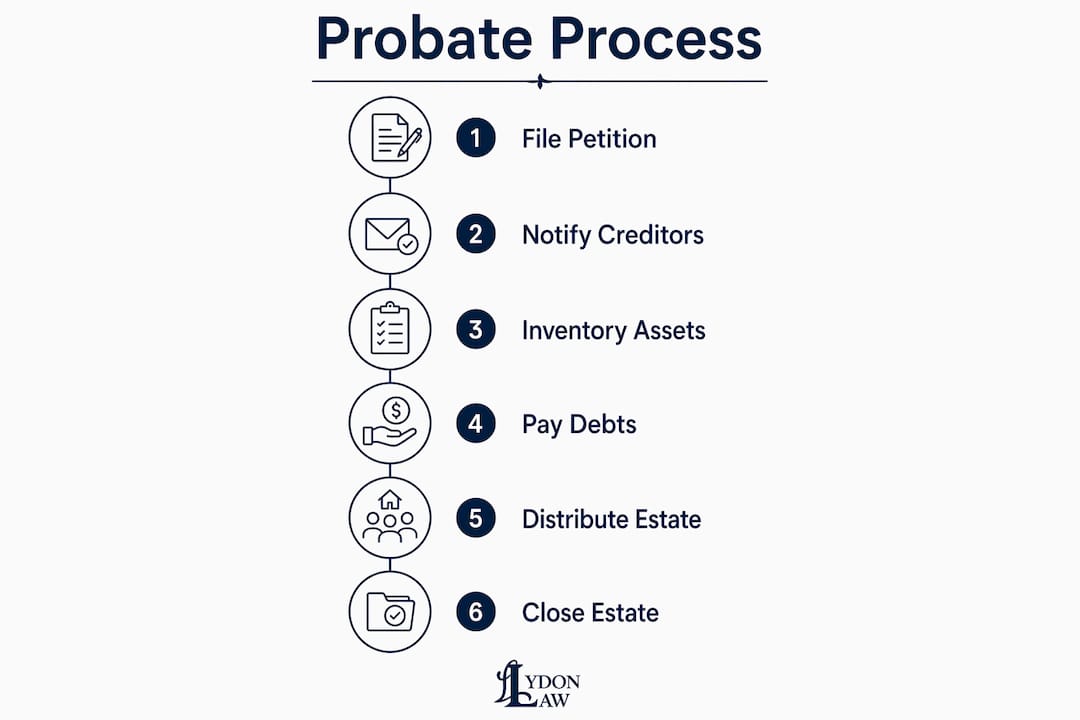
The probate process in New Hampshire follows a clear sequence of steps. Here is how it unfolds:
Pro Tip: Secure the surety bond before you file the petition if possible. Bond delays are one of the most common reasons probate start dates get pushed back by weeks.
The executor is a fiduciary, which means New Hampshire law holds them to the highest standard of care. Executors are legally required to act in the estate’s best interest at all times. Mismanagement can result in personal liability or removal by the court.
During the administration period, the executor’s core duties include:
New Hampshire law sets a specific order for paying debts. Creditors must be paid in this sequence: administrative costs first, then funeral expenses, then federal debts, then state claims, and finally general unsecured debts. Beneficiaries receive what remains only after every valid claim in each category is satisfied. If the estate is insolvent, lower-priority creditors may receive nothing, and beneficiaries receive nothing at all.
This priority structure protects the process from being manipulated. An executor who pays a family member before settling a federal tax debt can be held personally responsible for the shortfall.

Pro Tip: Keep a running ledger of every estate expense from day one. The final accounting requires documentation of every dollar in and out, and reconstructing records months later is far more stressful than maintaining them in real time.
Probate in New Hampshire carries both fixed and variable costs. Filing fees are tiered by estate value: $150 for estates at or below $10,000, $205 for estates between $10,001 and $25,000, and $305 for estates above $25,000. These are the court’s initial fees. They do not include surety bonds, legal fees, or publication costs for creditor notices.
| Cost Category | Typical Range |
|---|---|
| Court filing fee | $150–$305 depending on estate value |
| Surety bond premium | Varies by estate size and bond amount |
| Attorney fees | 2%–5% of estate value |
| Creditor notice publication | Set by county newspaper rates |
| Accounting and appraisal fees | Varies by estate complexity |
The typical probate timeline in New Hampshire runs 6–12 months for straightforward estates. That window is largely driven by the mandatory six-month creditor claim period. Even a simple estate with no disputes cannot close before creditors have had their full opportunity to file claims. Contested estates, those involving disputes over the will or executor conduct, can extend well beyond 12 months.
The New Hampshire probate court holds enforcement powers similar to the state’s superior court, including the authority to punish contempt. That authority matters when executors miss deadlines or fail to comply with court orders. The court does not simply send reminder letters. It can compel compliance.
Not every asset a person owns must pass through probate. Assets held in living trusts or with named beneficiaries bypass the probate process entirely, often saving both time and money. This is one of the most misunderstood aspects of estate administration in New Hampshire.
Assets that typically avoid probate include:
The practical benefit of these tools is significant. Probate-exempt assets transfer in weeks rather than months, avoid court fees, and remain private since probate records are public documents.
A will alone does not avoid probate. If you have a will but your assets are titled in your name only, without a trust or beneficiary designation, those assets still go through the full probate process. A simplified waiver of administration is available when a single surviving spouse or sole beneficiary exists, regardless of estate value. This option reduces court oversight and reporting requirements significantly.
The comparison below shows how probate and non-probate transfers differ in practice:
| Method | Probate required? | Typical transfer time | Privacy |
|---|---|---|---|
| Will only | Yes | 6–12 months | Public record |
| Revocable living trust | No | Weeks | Private |
| Beneficiary designation | No | Weeks | Private |
| Joint tenancy | No | Immediate | Private |
| TOD deed | No | Weeks | Private |
For anyone doing estate planning in New Hampshire, understanding this distinction is the single most effective way to reduce the burden on your family after you are gone.
New Hampshire probate court supervises estate administration through a structured process that requires fiduciaries to file inventories, satisfy creditors in priority order, and distribute assets only after all obligations are met.
| Point | Details |
|---|---|
| Court structure | Circuit Court Probate Divisions in each county handle all estate matters with electronic filing. |
| Key deadlines | Inventory is due within 90 days; final accounting within 12 months of executor appointment. |
| Debt payment order | Administrative costs, funeral expenses, and federal debts are paid before general creditors or beneficiaries. |
| Probate costs | Filing fees range from $150 to $305, with attorney fees typically adding 2%–5% of estate value. |
| Probate avoidance | Trusts, beneficiary designations, and TOD deeds transfer assets outside probate, saving time and cost. |
One thing stands out after working with New Hampshire families on probate matters: most people are surprised by how much of an estate can actually avoid probate with the right planning in place. The assumption that everything must go through court is widespread, and it costs families real time and money.
The surety bond requirement catches executors off guard more than almost anything else. You cannot receive your Letters of Authority until the bond is in place, and arranging a bond takes time. Families who plan ahead, who know this step is coming, move through the process far more smoothly than those who discover it after the fact.
I also want to be direct about contested estates. When a will is disputed or an executor’s conduct is questioned, the court’s enforcement authority is real and consequential. The probate court is not a passive observer. It has the power to remove executors, compel accounting, and sanction non-compliance. If you are in a situation where family members disagree about the estate, getting legal guidance early is not optional. It is the difference between a difficult process and a damaging one.
Working with the Circuit Court Probate Division is manageable when you understand the rules. The deadlines are firm, the paperwork is specific, and the fiduciary duties are serious. But none of it is beyond reach when you approach it with the right information and support.
— Rich
Probate is a legal process with real deadlines, financial stakes, and personal consequences for your family. Lydon is a boutique law firm with offices in Nashua and Portsmouth, serving clients throughout New Hampshire on probate and estate matters. Attorney Kalie Lydon works directly with each client, providing clear guidance on executor duties, court filings, creditor claims, and asset distribution. Whether you are administering an estate, contesting a will, or trying to understand your rights as a beneficiary, Lydon offers the hands-on legal support you need. Explore Lydon’s full range of civil law services to find the right path forward for your situation.
Probate court in New Hampshire is the division of the Circuit Court that oversees the legal administration of a deceased person’s estate. It appoints fiduciaries, supervises asset distribution, and protects the rights of creditors and beneficiaries.
The typical probate process in New Hampshire takes 6–12 months for straightforward estates. Contested or complex estates can take significantly longer due to disputes or extended court proceedings.
No. Assets held in living trusts, accounts with named beneficiaries, jointly owned property, and real estate with TOD deeds all pass outside of probate. Only assets titled solely in the deceased person’s name without a beneficiary designation require probate.
You file a Petition for Estate Administration with the Circuit Court Probate Division in the county where the deceased person lived. New Hampshire courts accept electronic filings, and you will need the original will if one exists.
An executor must file an inventory within 90 days, notify creditors, pay valid debts in the legally required priority order, and submit a final accounting within 12 months. Executors are fiduciaries and can face personal liability for mismanagement.

© 2026 Lydon Law|Legal Disclaimer|Privacy Policy