Menu


TL;DR:
- Probate in New Hampshire is a court-supervised process that manages settling a decedent’s estate, including validating wills and distributing assets. It typically takes 6 to 12 months for straightforward cases, with a mandatory six-month creditor claim period delaying asset distribution. Alternatives like waivers of administration, transfer-on-death deeds, and living trusts can bypass full probate and save time.
Probate in New Hampshire is the court-supervised process of settling a deceased person’s estate, including validating wills, paying debts, and distributing assets to heirs. Understanding how does probate work in New Hampshire matters whether you are an executor managing a loved one’s affairs or a beneficiary waiting on an inheritance. The New Hampshire Probate Division of the Circuit Court oversees this process, and the timeline typically runs 6–12 months for straightforward estates. Knowing the steps, costs, and available shortcuts can save your family significant time, money, and stress.
The New Hampshire probate process follows a defined sequence. Each step has legal deadlines, and missing them can delay the entire estate administration.

Step 1: File the will and petition with the Probate Division. You must file the original will, a petition for probate, and a death certificate with the Probate Division of the Circuit Court in the county where the deceased lived. This filing should happen within 30 days of the date of death.
Step 2: Appointment of executor or administrator. The court reviews the petition and formally appoints an executor (named in the will) or an administrator (when no will exists). This person takes legal responsibility for managing the estate through every remaining step.
Step 3: Notify creditors and publish notice. New Hampshire law requires the executor to publish notice in a newspaper for three consecutive weeks and mail individual notices to known creditors. This step starts the mandatory creditor claim period.
Step 4: Complete the estate inventory. The executor must file an inventory of all estate assets with the court within 90 days of appointment. Each asset must be listed at fair market value. Real estate, bank accounts, vehicles, and personal property all belong on this list.
Step 5: Manage and pay valid claims. During the six-month creditor claim period, the executor reviews submitted claims, pays valid debts, and rejects invalid ones. No distribution to heirs can occur before this period closes.
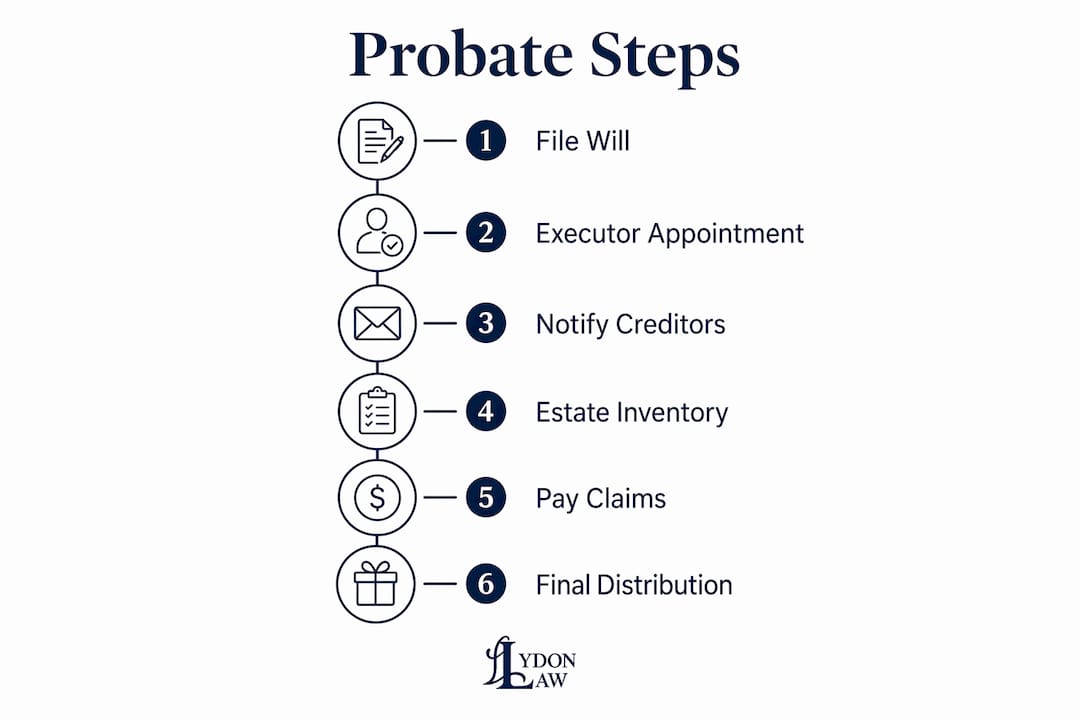
Step 6: File final accounting and distribute assets. Once the creditor period ends and all debts are settled, the executor files a final accounting with the court. After the court approves it, the executor distributes remaining assets to beneficiaries and formally closes the estate.
Pro Tip: Keep a detailed log of every action you take as executor, including dates, amounts paid, and communications with creditors. Courts expect organized records at the final accounting stage, and gaps in documentation can trigger delays or objections from beneficiaries.
The standard probate duration in New Hampshire runs 6–12 months for simple estates and 12–18 months for complex or contested matters. The mandatory six-month creditor claim period is the single biggest driver of that minimum timeline. Even when everything else moves quickly, no executor can distribute assets before those six months expire.
Court filing fees follow a tiered structure based on estate value. Estates valued at $25,000 or less carry a filing fee of $85, while estates exceeding $25,000 carry a fee of $195. A separate fee schedule from the Probate Division lists fees ranging from $150 for estates under $10,000 up to $305 for estates over $25,000, so you should confirm the current schedule directly with your local Circuit Court at the time of filing.
Attorney fees in New Hampshire typically run 2–5% of total estate value, subject to court approval. Executors are entitled to reasonable compensation at the same general range of 2–5% of estate value, also approved by the court during final accounting. On a $300,000 estate, combined professional fees could reach $15,000 or more before distribution begins.
New Hampshire has no state inheritance or estate tax. That is a meaningful advantage compared to many other states. However, federal estate tax rules still apply to very large estates, and it is worth reviewing any outstanding federal obligations with a tax professional. For questions about federal tax obligations tied to an estate, resources like IRS tax guidance can help clarify what applies in New Hampshire.
| Cost category | Typical range |
|---|---|
| Court filing fee | $85–$305 depending on estate value |
| Attorney fees | 2–5% of estate value |
| Executor compensation | 2–5% of estate value |
| State inheritance tax | None |
| Probate duration | 6–18 months depending on complexity |
New Hampshire offers meaningful alternatives to full probate for qualifying estates. Understanding these options can save your family months of court involvement.
Waiver of administration. New Hampshire uses a waiver of administration process rather than a traditional small estate affidavit. Eligibility is based on the beneficiary’s relationship to the deceased, not on estate value. A sole beneficiary who qualifies can avoid the full inventory, bond, and accounting requirements of standard probate. The court still approves the waiver, but the process is significantly shorter.
Transfer-on-death deeds. Since july 2024, New Hampshire allows TOD deeds for real estate. A property owner can designate a beneficiary who receives the property automatically at death, bypassing probate entirely. The deed must be recorded before death to be effective.
Beneficiary designations and joint tenancy. Life insurance policies, retirement accounts, payable-on-death bank accounts, and jointly held property all transfer outside of probate. These assets pass directly to named beneficiaries without court involvement.
Living trusts. A revocable living trust holds assets during your lifetime and distributes them at death according to trust terms. Assets held in a properly funded trust avoid probate entirely, saving both time and professional fees. The key requirement is that assets must be retitled into the trust’s name before death.
Pro Tip: New Hampshire’s waiver of administration is distinct from small estate affidavits used in other states. Do not assume the rules from another state apply here. The eligibility test in New Hampshire focuses on your relationship to the deceased, not on a dollar threshold.
Executors and beneficiaries regularly encounter the same set of problems. Knowing them in advance puts you in a much stronger position.
Missing the 30-day filing deadline. The will should be filed with the Probate Division within 30 days of death. Late filings do not automatically void the process, but they can create complications and signal to the court that administration is disorganized.
Distributing assets too early. Paying out inheritances before the six-month creditor period closes is one of the most serious mistakes an executor can make. If valid creditor claims arrive after distribution, the executor can be held personally liable for the shortfall.
Incomplete creditor notification. Publishing notice in a newspaper for three consecutive weeks is required, but executors must also mail individual notices to known creditors. Skipping the mailed notices can leave the estate exposed to later claims.
Disorganized inventory. The 90-day inventory deadline is firm. Missing it or filing an incomplete inventory draws court scrutiny and delays the entire process. Every asset, including digital accounts and personal property, belongs on the list.
Executor compensation disputes. Executor fees must be approved by the court. Taking compensation before final accounting approval, or taking an amount the court considers unreasonable, can trigger objections from beneficiaries and require repayment.
Pro Tip: New Hampshire’s Probate Division staff can answer procedural questions and direct you to the correct forms. They cannot give legal advice, but they are generally accessible and helpful. Visiting the clerk’s office in person at the start of the process can prevent many common filing errors.
For a deeper look at why probate is required under New Hampshire law, Lydon has published a clear guide covering the legal basis for the process.
The New Hampshire probate process requires court supervision, a mandatory six-month creditor period, and careful compliance with filing deadlines to protect both executors and beneficiaries.
| Point | Details |
|---|---|
| Mandatory creditor period | No asset distribution is allowed before the six-month creditor claim period closes. |
| Filing deadlines matter | The will must be filed within 30 days of death; the estate inventory is due within 90 days of appointment. |
| Costs are predictable | Filing fees run $85–$305; attorney and executor fees typically total 2–5% of estate value each. |
| Alternatives exist | Waiver of administration and TOD deeds can reduce or eliminate court involvement for qualifying estates. |
| No state estate tax | New Hampshire imposes no inheritance or estate tax, reducing the overall cost of estate settlement. |
The six-month creditor period surprises more people than any other part of this process. Families often expect to wrap things up in a matter of weeks, especially when the estate is modest and the will is clear. The creditor period does not care how simple the estate is. It runs regardless, and no judge can waive it. That reality shapes every realistic conversation about probate timelines.
The waiver of administration is genuinely underused. Many families who qualify for it go through full probate simply because they did not know the option existed. If the deceased left assets to a sole beneficiary who meets the relationship criteria, the waiver can cut months off the process and eliminate the bond and accounting requirements entirely. That is worth a conversation with an attorney before you file anything.
On the trust question: a living trust costs money to set up and requires discipline to fund properly. But for estates with real property, business interests, or multiple beneficiaries, the savings in probate time and professional fees often exceed the upfront cost. The TOD deed option, available since july 2024, is a lighter-weight alternative for families whose main concern is the family home.
My strongest advice for any executor is this: document everything from day one. Courts do not expect perfection. They expect honesty and organization. An executor who keeps clean records and communicates openly with beneficiaries rarely runs into serious problems, even when the estate is complicated.
— Rich
Probate is a legal process with real deadlines, financial consequences, and personal stakes. Lydon serves clients throughout New Hampshire from offices in Nashua and Portsmouth, guiding executors and beneficiaries through every stage of estate administration. Whether you need help filing the initial petition, managing creditor claims, or understanding whether a waiver of administration applies to your situation, Lydon’s attorneys work directly with you from start to finish. The firm also assists with estate planning to help families reduce or avoid probate before it becomes necessary. Contact Lydon to schedule a consultation and get clear answers about your specific situation.
Probate in New Hampshire takes 6–12 months for simple estates and up to 18 months for complex or contested cases. The mandatory six-month creditor claim period sets the practical minimum.
Filing fees range from $85 for estates valued at $25,000 or less to $195 or more for larger estates, depending on the current Probate Division fee schedule.
Yes. Options include a waiver of administration for qualifying sole beneficiaries, transfer-on-death deeds for real property, beneficiary designations on financial accounts, and living trusts that hold assets before death.
An executor files the will, notifies creditors, completes a 90-day asset inventory, pays valid debts, and files a final accounting with the court before distributing assets to beneficiaries.
New Hampshire has no state inheritance or estate tax. Federal estate tax rules may apply to very large estates, but most New Hampshire estates owe no state-level death taxes.

© 2026 Lydon Law|Legal Disclaimer|Privacy Policy