Menu


TL;DR:
- In a New Hampshire divorce, all assets owned by either spouse are subject to division under an all-property equitable distribution law. Courts presume a 50/50 split but can deviate based on 15 statutory factors, such as marriage length and contributions. Proper documentation and understanding of laws like QDROs are crucial to protecting your financial interests.
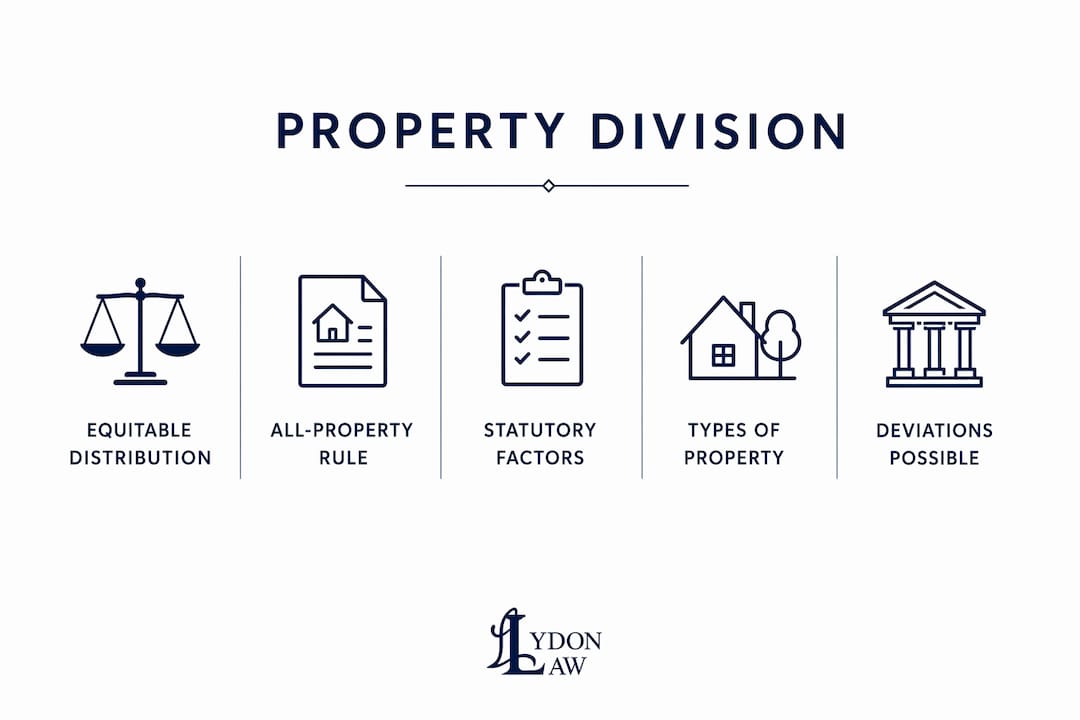
Property division in a New Hampshire divorce is governed by an “all-property” equitable distribution model under RSA 458:16-a, meaning every asset owned by either spouse at the time of divorce is subject to division, regardless of when or how it was acquired. This includes premarital savings, inheritances, and gifts. Courts begin with a legal presumption of a 50/50 split, but judges may deviate from that equal division by applying 15 statutory factors. Understanding how this process works gives you a clearer picture of what to expect and how to protect your financial future.
New Hampshire uses an all-property equitable distribution approach. Unlike many states that protect premarital or inherited assets from division, New Hampshire divides all assets owned by either spouse at the time of divorce. The burden falls on you to argue for an unequal split using statutory factors, not to exclude property from the pool entirely.

The term “equitable” does not mean automatic. It means fair, and fair does not always mean equal. A judge starts with the 50/50 presumption and then evaluates whether the specific facts of your marriage justify a different outcome. When a judge departs from equal division, New Hampshire law requires a written explanation of the reasons.
This all-property rule is the single most important thing to understand before entering any divorce negotiation. Many people assume their premarital retirement account or an inheritance from a parent is off the table. In New Hampshire, that assumption is wrong, and going in unprepared can cost you significantly.
The scope of divisible property in New Hampshire is broad. Courts consider real estate, bank accounts, retirement accounts, business interests, vehicles, investment portfolios, and personal property. Debts are also part of the equation, and full financial disclosure of all assets and liabilities is required from both spouses.
The following categories are all subject to division under New Hampshire divorce property laws:
Assets are valued at the time of divorce, not at the time they were acquired. Courts also consider each spouse’s contributions to the marriage, income disparities, and future earning potential when weighing how to divide what exists.
The default equal division presumption under RSA 458:16-a is a starting point, not a guarantee. Judges may deviate by applying 15 statutory factors, and they must provide written reasons when they do. The most commonly applied factors include:
Pro Tip: Document your contributions to the marriage carefully. Non-financial contributions, such as managing the household or relocating for a spouse’s job, are legitimate statutory factors. Courts cannot weigh what they cannot see.
The fault factor surprises many people. Emotional betrayal alone rarely moves a judge. The law requires proof that the fault caused measurable harm. If you believe fault is relevant to your case, discuss the evidentiary requirements with an attorney before building your strategy around it.
The marital home is often the largest single asset in a divorce, and it carries emotional weight that other assets do not. Courts generally prefer one of three approaches when handling the family residence:
The financial reality of a buyout is where many plans fall apart. The spouse who wants to keep the home must qualify for a new mortgage in their name alone. If that is not financially feasible, a forced sale becomes the likely outcome regardless of either party’s preference.
Children’s needs and custodial arrangements play a meaningful role in these decisions. A judge may favor a deferred sale to minimize disruption to the children’s school and home environment, even when an immediate sale would be financially cleaner.
Pro Tip: Get an independent appraisal of the home before negotiations begin. Relying on online estimates or a spouse’s informal valuation can lead to a settlement built on inaccurate numbers.
Retirement benefits are part of the divisible estate in New Hampshire, including amounts accumulated before the marriage. The 2025 LeGault ruling expanded how pre-marital retirement contributions are valued, making it even more important to obtain accurate account histories and actuarial valuations.
Dividing a retirement account requires a Qualified Domestic Relations Order, commonly called a QDRO. A QDRO is a separate legal document that instructs the plan administrator to transfer a portion of the account to the other spouse. Without a properly drafted QDRO, the receiving spouse may face significant tax penalties on the transferred funds. This is a procedural step that many clients overlook until it becomes an expensive problem.
Inherited property and gifts received during the marriage are divisible under New Hampshire’s all-property rule. However, inheritances are often weighted more favorably under the statutory factors when the recipient spouse kept them separate and documented their origin clearly. Gifts given to the couple jointly are harder to protect than those given to one spouse individually.
New Hampshire law treats pets as tangible property, but with a meaningful distinction. A 2019 statutory amendment requires courts to consider the welfare of the pet when making division decisions. This does not give pets the same legal standing as children, but it does mean a judge can factor in which spouse is better positioned to care for the animal.
| Asset type | Key consideration | Special requirement |
|---|---|---|
| Retirement accounts | Pre-marital portions are still divisible | QDRO required to avoid tax penalties |
| Inheritances | Divisible but weighted under statutory factors | Documentation of separate nature strengthens your position |
| Gifts | Couple gifts are harder to protect than individual gifts | Proof of intent and recipient matters |
| Pets | Treated as tangible property | Court must consider pet welfare under 2019 statute |
Preparation is the most effective tool you have before entering the New Hampshire divorce property division process. The following steps give you the strongest possible foundation:
If you receive notice that divorce proceedings have begun, the steps outlined in this guide on being served explain what to do immediately to protect your position.
New Hampshire’s all-property equitable distribution rule means every asset owned by either spouse is subject to division, with a 50/50 presumption that judges can adjust using 15 statutory factors.
| Point | Details |
|---|---|
| All-property rule applies | Premarital assets, inheritances, and gifts are all divisible under RSA 458:16-a. |
| 50/50 is the starting point | Judges can deviate with written justification based on 15 statutory factors. |
| QDROs are required for retirement | Without a QDRO, transferring retirement funds triggers tax penalties. |
| Documentation protects you | Clear records of asset origins and contributions strengthen your statutory factor arguments. |
| Timelines vary significantly | Uncontested cases close in 2–3 months; contested cases can run 8–14 months or more. |
Most clients walk into their first meeting assuming their premarital savings or an inheritance from a parent is untouchable. That assumption costs people more than almost any other misconception I see in New Hampshire divorce cases. The all-property rule is genuinely different from what most people expect, and the gap between expectation and reality is where financial harm happens.
The statutory factors are your real tool in this state. You cannot exclude property from the pool, but you can argue persuasively for an unequal division if you have the documentation to support it. I have seen clients protect the majority of a premarital retirement account because they kept meticulous records. I have also seen clients lose ground on an inheritance because they commingled it with joint funds years earlier.
The family home is where emotions and finances collide most directly. My honest advice is to run the numbers on a buyout before you decide you want to keep the house. Mortgage qualification, property taxes, and maintenance costs look very different on a single income. A clean sale and a fresh financial start often serves people better than holding on to a property they cannot comfortably afford.
Retirement accounts surprise nearly every client. The QDRO requirement is not optional, and a poorly drafted one can trigger taxes that wipe out a meaningful portion of what you were awarded. Get that document right the first time.
— Rich
Divorce property division in New Hampshire involves real legal complexity, and the stakes for your financial future are high. Lydon’s New Hampshire family law attorneys work directly with you through every stage of the process, from gathering financial documentation and identifying applicable statutory factors to negotiating a property settlement agreement and preparing QDROs for retirement assets. The firm handles both uncontested and contested cases, and attorney Kalie Lydon brings direct courtroom experience to cases that require litigation. If you are facing a divorce and want clear, practical guidance on how your assets will be treated, contact Lydon to discuss your situation.
New Hampshire’s all-property rule means all assets owned by either spouse at the time of divorce are subject to division, including premarital property, inheritances, and gifts. There is no category of automatically protected separate property.
Courts start with a 50/50 presumption but can deviate based on 15 statutory factors, including marriage length, economic status, and contributions. Judges must provide written reasons when they order an unequal division.
Yes. A Qualified Domestic Relations Order is required to transfer retirement funds to a former spouse without triggering taxes or penalties. It is a separate legal document from the divorce decree itself.
Inheritances are divisible under New Hampshire law but are weighted under the statutory factors. Keeping an inheritance in a separate account and documenting its origin gives you the strongest argument for receiving a larger share of it in the final division.
Uncontested divorces with agreed property settlements typically finalize in 2–3 months. Contested cases involving disputed assets or complex valuations can take 8–14 months or longer, depending on the issues involved.

© 2026 Lydon Law|Legal Disclaimer|Privacy Policy