Menu


TL;DR:
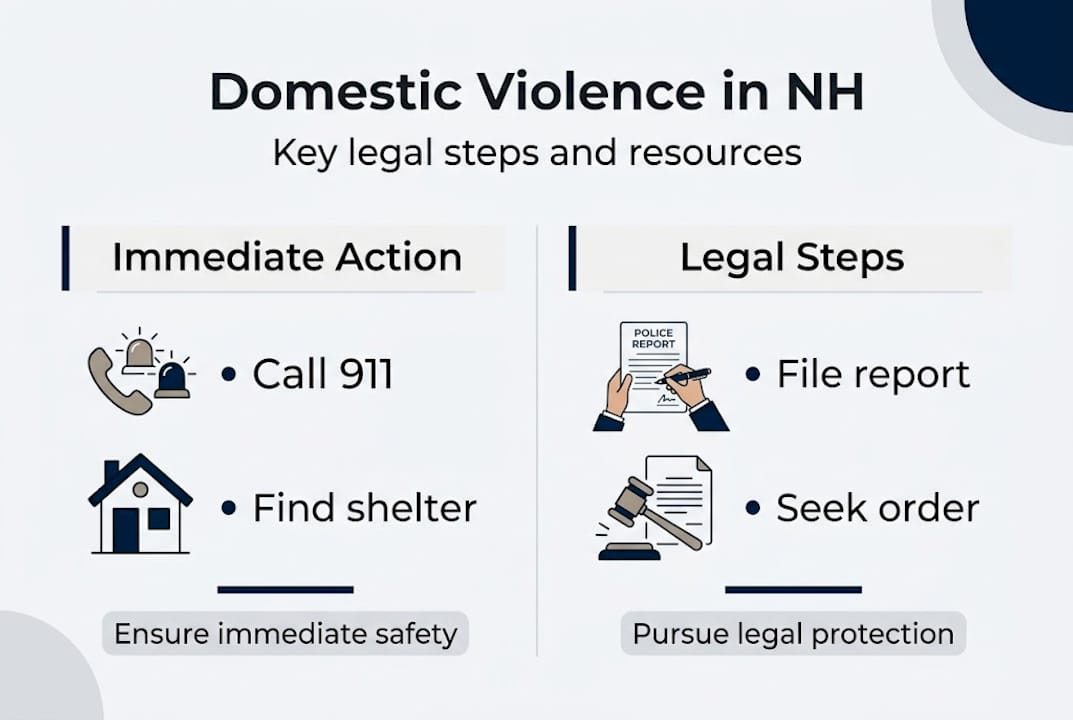
- Immediate safety measures include calling 911 and creating a personalized safety plan.
- Gathering organized evidence strengthens your legal case for protective orders and custody.
- Acting promptly and with legal support is crucial before potential legislative changes limit access to protection.
Facing domestic violence in New Hampshire is one of the most frightening experiences a person can go through. Every decision you make in those early moments can have lasting consequences for your safety, your children, and your legal rights. 3,476 domestic violence petitions were filed in NH in 2024, and that number reflects real people who needed help fast. This guide walks you through exactly what to do, from your first steps to securing legal protection, so you can act with clarity and confidence even during one of the most stressful moments of your life.
| Point | Details |
|---|---|
| Immediate safety first | Call 911 or the NH Coalition helpline if you are in danger, and secure a safe location as your top priority. |
| Gather vital evidence | Document incidents and organize records like messages, photos, and witness statements to support your case. |
| Use existing legal protections | You can seek a civil protective order without criminal charges, but proposed law changes may affect this soon. |
| Get skilled legal help | An experienced attorney ensures you avoid common mistakes and makes navigating the legal system less overwhelming. |
Your safety comes first. If you are in immediate danger, call 911. Police can intervene right away, separate you from the abuser, and connect you with emergency resources on the spot. Do not wait to see if the situation calms down on its own. Abuse tends to escalate, and early intervention often makes the critical difference.
Once you are out of immediate danger, reach out for confidential support. The NH Coalition Against Domestic & Sexual Violence operates a 24/7 helpline at 1-866-644-3574 staffed by trained advocates who can help you create a safety plan, identify local shelters, and understand your legal options. The call is free and confidential.
A safety plan is a practical, personalized strategy for protecting yourself if the situation escalates again. Yours should include:
“Safety planning is not about assuming the worst. It is about making sure you are prepared so fear does not have to make your decisions for you.”
Pro Tip: If you are unsure whether what you are experiencing qualifies as abuse, reviewing signs you may be in an abusive relationship can give you clarity. Abuse takes many forms, including emotional, financial, and psychological control, not just physical harm.
Understanding the NH domestic violence legal process early on can also help you feel less overwhelmed. Knowing what comes next makes it easier to take each step with intention.
Once you are in a safe place, your next priority is gathering the information and documentation that will support your legal case. Courts need evidence. The more organized and detailed your records are, the stronger your position will be when you seek protection or pursue related family law matters.

New Hampshire currently operates a dual civil and criminal system, which means you can seek a civil protective order even without police involvement. This is critically important: the current civil protection system allows survivors who are reluctant to involve law enforcement to still access fast legal relief. Proposed changes could limit that access, which makes documenting everything now even more urgent.
Here is what to collect and organize:
If children are affected, document that too. Note any behavioral changes, statements the children have made, or incidents they witnessed. This information is directly relevant to custody and visitation decisions.
| Document type | Where to get it | Why it matters |
|---|---|---|
| Police report | Local police department | Establishes official record of incidents |
| Medical records | Hospital or clinic | Confirms physical harm |
| Photos and screenshots | Your phone or device | Visual, timestamped evidence |
| Prior court orders | NH court system | Shows history of legal involvement |
| Witness statements | Friends, neighbors, coworkers | Corroborates your account |
Familiarizing yourself with your domestic violence law rights in New Hampshire will help you understand how this evidence fits into the broader legal picture.
With your documentation ready, you can move forward with formal legal protection. Here is exactly how the process works in New Hampshire.
New Hampshire has recently strengthened protections for survivors. Governor Ayotte signed new laws in 2025 including SB 140, which established a Domestic Violence Fatality Review Committee, and HB 62, which allows military protective orders to be recognized in civil domestic violence cases. These are meaningful steps forward.
Pro Tip: If you have children, ask your attorney about requesting temporary custody and child support as part of your protective order petition. Courts can address these matters simultaneously, reducing the need for multiple separate filings.
For a fuller picture of what protections are available, reviewing NH domestic violence protections can help clarify your options. If you are also facing criminal allegations in connection with your case, understanding your domestic violence defense rights is equally important.
New Hampshire’s domestic violence laws are in a period of active change. Staying informed matters, because proposed reforms could significantly affect how survivors access protection.
Right now, you have the right to:
As of April 2026, proposed legislation HB 1740 would eliminate the ability to obtain a civil protective order without first establishing criminal probable cause. Domestic violence advocates across New Hampshire have strongly opposed this bill, warning it would create serious barriers for survivors who are not ready to involve law enforcement.
The proposed HB 1740 would require that a criminal investigation be initiated before a civil protective order could be issued. For many survivors, especially those in complicated family situations or who fear retaliation, this would be a significant and harmful barrier. The status of this legislation is still unclear as of April 2026.
What this means for you today: The current system still allows you to seek civil protection without criminal charges. That window may close. Acting now, before any legal changes take effect, protects your access to the fastest available relief.
Accessing domestic violence recovery resources alongside your legal steps can also support your overall wellbeing during this process. Legal protection and personal healing go hand in hand.
Working with a knowledgeable attorney who tracks legislative developments is one of the most reliable ways to stay protected as the law evolves. Learn more about the concrete domestic violence attorney benefits in situations like yours.
Most guides walk you through the paperwork. What they rarely say plainly is this: waiting too long can cost you options you cannot get back.
In domestic violence cases, time matters in very specific ways. Emergency protective orders carry the most immediate relief, but courts need to see that you acted promptly and that the danger was real. Delays in filing, gaps in documentation, or inconsistencies in your account can all work against you at a hearing, even when your situation is genuine and serious.
The current dual civil and criminal system in New Hampshire gives survivors a powerful tool: the ability to seek protection without police involvement. That option exists right now, but proposed legislation could eliminate it. Survivors who wait may find themselves navigating a far more restrictive legal environment.
An experienced family law attorney does more than fill out forms. They help you anticipate what the other side will argue, prepare you for the emotional weight of a court hearing, and ensure that your documentation tells a clear, credible story. They can also identify related issues, such as custody, support, and property access, that you may not have considered yet but that directly affect your stability going forward.
If you are wondering whether legal representation matters in situations like yours, the honest answer is yes. It matters more than most people expect, and the difference is often most visible in those first critical hearings.
If you are facing a domestic violence situation in New Hampshire, you do not have to navigate this alone. Lydon Law provides compassionate, experienced legal representation for individuals across the state, with offices in Nashua and Portsmouth. Attorney Kalie Lydon works directly with every client, bringing real courtroom experience and a clear understanding of New Hampshire’s family courts to each case.
Whether you need help filing for a protective order, addressing New Hampshire family law matters like custody or support, or working with a skilled domestic violence lawyer who understands what you are going through, Lydon Law is ready to help. If criminal charges are also part of your situation, the firm’s criminal defense options ensure your rights are fully protected. Contact Lydon Law today for a confidential consultation.
In emergency situations, a protective order can often be issued the same day you file your petition at court. New Hampshire courts prioritize these requests when immediate danger is demonstrated, and thousands of petitions are processed each year with this urgency in mind.
Bring police reports, medical records, photos, witness information, and any messages or emails that show evidence of abuse. The more organized and specific your documentation is, the more effectively it supports your case.
Proposed reforms could make it harder to get a civil protective order without criminal charges, but these changes are still under debate. HB 1740 remains unresolved as of April 2026, which is why acting under current law is so important.
You can call the NH Coalition Against Domestic & Sexual Violence 24/7 helpline at 1-866-644-3574 for immediate support and advice. The service is free, confidential, and available around the clock.
While not required, having a skilled attorney can make the process safer and help you avoid costly mistakes. The current civil protection system is still accessible without one, but legal guidance significantly strengthens your position, especially at a contested hearing.

© 2026 Lydon Law|Legal Disclaimer|Privacy Policy