Menu


TL;DR:
- Parental rights in New Hampshire include responsibilities over a child’s care and major decisions, governed by RSA 461-A.
- Courts presume that more than 40% parenting time benefits the child’s welfare, but they can order different arrangements with written evidence.
Parental rights are defined as the legal authority a parent holds over their child’s care, custody, and upbringing. In New Hampshire, the term “parental rights and responsibilities” is the official legal standard under RSA 461-A, which replaced the older terms “custody” and “visitation” in 2005. That change was not just semantic. It reflects a deliberate shift toward viewing both parents as active participants in a child’s life. If you are a parent in New Hampshire facing a separation, divorce, or custody dispute, understanding what is parental rights under state law is the first step toward protecting your relationship with your child.
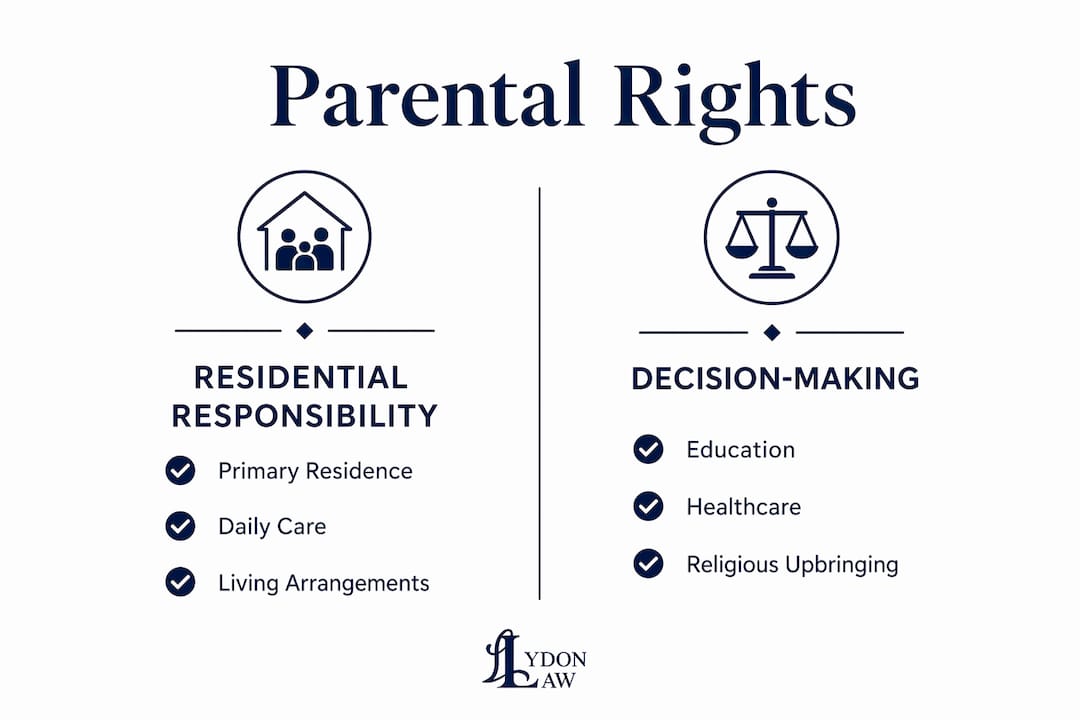
New Hampshire divides parental rights and responsibilities into two distinct categories: residential responsibility and decision-making responsibility. Residential responsibility defines where your child lives and who provides day-to-day care. Decision-making responsibility covers major choices about your child’s education, healthcare, and religious upbringing.

These two categories can be held jointly or separately. A court may order one parent to have primary residential responsibility while both parents share decision-making authority. The arrangement depends on the specific facts of your situation and what the court determines serves your child’s welfare.
Joint decision-making is presumed to be in the child’s best interest unless evidence shows it would cause harm. This means the default position in New Hampshire is that both parents stay involved in major decisions, not just the parent the child lives with most of the time.
New Hampshire courts handle these matters through the Circuit Court Family Division. All parenting disputes, whether arising from divorce or unmarried parents, go through this court. The statutory goal in every case is the same: act in the best interest of the child.
New Hampshire law gives parents a clear set of rights and responsibilities once a parenting order is in place. Knowing these rights helps you participate fully in your child’s life and avoid unintentional violations of a court order.
Residential responsibility. You have the right to have your child live with you for a defined portion of the year. New Hampshire law defines approximately equal parenting time as each parent having residential responsibility for more than 40% of the year. This is not automatically a 50/50 split. A judge must provide written findings if ordering a different arrangement, which means the burden falls on the court to justify departing from roughly equal time.
Decision-making responsibility. You have the right to participate in decisions about your child’s schooling, medical care, and religious practice. When joint decision-making applies, both parents must communicate and agree on major choices. Courts take this requirement seriously.
Parenting plan. Every custody arrangement in New Hampshire requires a written parenting plan. This document spells out schedules, holiday arrangements, communication rules, and procedures for resolving disagreements. You and the other parent can create this plan together, or a judge will create it for you.
Child Impact Program. New Hampshire requires parents in custody disputes to complete a mandatory 4-hour Child Impact Program before the court finalizes any parenting plan. Skipping this step delays your case. Complete it early to avoid unnecessary setbacks.
Right to seek modification. If circumstances change significantly, you have the right to ask the court to modify the existing parenting order. This requires filing a new petition and demonstrating a substantial change in circumstances.
Pro Tip: Keep a written record of your parenting time, communications with the other parent, and any missed exchanges. Courts rely heavily on documented patterns when evaluating modification requests or disputes.
The types of child custody recognized under New Hampshire law can feel confusing at first. Breaking them down into residential and decision-making components makes the framework much easier to apply to your own situation.
Establishing parental rights in New Hampshire starts with filing a petition in the Circuit Court Family Division. The court then sets a process in motion that can resolve through agreement or, if necessary, a trial.
The filing fees in New Hampshire are specific. An initial petition costs $282, while a modification petition costs $225. These fees apply regardless of whether you are married or unmarried. Knowing these numbers upfront helps you plan and avoids surprises.
Once a petition is filed, parents have several options for resolving the dispute:
One procedural rule catches many parents off guard. If you want to relocate your child’s primary residence, you must give the other parent 60 days written notice before the move. Failing to provide this notice can result in court sanctions and damage your credibility in future proceedings.
Termination is a separate and far more serious legal process. It permanently ends a parent’s legal relationship with their child. New Hampshire courts order termination only in extreme circumstances, such as abandonment, abuse, or neglect. It is not a remedy used in typical custody disputes.
| Process | Key Detail |
|---|---|
| Initial petition filing | $282 fee in NH Circuit Court Family Division |
| Modification petition | $225 fee; requires proof of substantial change |
| Relocation notice | 60 days written notice to other parent required |
| Child Impact Program | Mandatory 4-hour program before plan is finalized |
| Termination of rights | Reserved for extreme cases; permanently ends parental relationship |
The best interests of the child is the controlling legal standard in every New Hampshire parental rights decision. RSA 461-A:6 lists 13 statutory factors that courts weigh when making these determinations. No single factor controls the outcome. Judges apply them case by case, giving more weight to the factors most relevant to your specific circumstances.
The key factors include the quality of each parent’s relationship with the child, each parent’s ability to meet the child’s physical and emotional needs, the child’s adjustment to home and school, and evidence of domestic abuse or substance abuse. Courts also consider each parent’s willingness to support the child’s relationship with the other parent. A parent who actively undermines that relationship faces a serious disadvantage in court.
The child’s own preference can be considered if the child is mature enough to form a reasoned opinion. New Hampshire law does not set a specific age for this. Judges use their discretion based on the child’s maturity and the circumstances.
Pro Tip: Demonstrating cooperation with the other parent, even when it is difficult, is one of the most effective ways to show a court that you prioritize your child’s welfare over personal conflict.
The presumption of approximately equal parenting time fits directly into the best interests analysis. The NH statute presumes that roughly equal time with both parents serves the child’s welfare. A judge who orders something different must explain why in writing. That requirement creates accountability and protects your right to meaningful parenting time.
Understanding how these factors apply to your situation is where legal guidance becomes most valuable. The child custody step-by-step guide from Lydon walks through how courts apply these standards in practice.
Protecting your parental rights starts with understanding the correct legal terminology. New Hampshire courts use “parental rights and responsibilities,” not “custody” and “visitation.” Using the right language in your filings and communications signals to the court that you understand the process. The NH Judicial Branch confirms that using accurate statutory terminology in filings is critical for clarity and proper court processing.
Practical steps that protect your rights include:
Many parents also benefit from understanding parental visitation standards in New Hampshire, particularly when one parent has less than 40% residential responsibility. Knowing your rights in that situation helps you advocate for meaningful time with your child.
For parents navigating child support alongside custody, a child support attorney can provide useful context on how support obligations interact with parenting time arrangements.
Pro Tip: Never make informal verbal agreements about parenting time without getting them in writing and, ideally, approved by the court. Verbal agreements are difficult to enforce and can create confusion that harms your case later.
The most common mistake I see is parents assuming that “joint custody” automatically means equal time. New Hampshire does not use that phrase. The law presumes approximately equal parenting time, but that presumption is not a guarantee. A judge can order a different arrangement if the evidence supports it. Parents who walk into court expecting a 50/50 split without preparing their case often leave disappointed.
The second mistake is treating the Child Impact Program as a formality. Courts notice when parents complete it late or treat it carelessly. Judges see it as a signal of how seriously you take your child’s welfare. Completing it promptly and thoughtfully sets a positive tone for your case.
The third thing I consistently observe is how much better outcomes look when parents negotiate rather than litigate. A negotiated parenting plan reflects what you and the other parent actually know about your child’s needs. A judge-imposed order reflects what a stranger could determine in a few hours of testimony. The difference in quality is significant. Mediation and attorney-assisted negotiation are not signs of weakness. They are the most effective tools available to you.
Finally, parents often underestimate how much the court values cooperation. Demonstrating that you support your child’s relationship with the other parent, even when the relationship between the two of you is strained, is one of the strongest things you can do for your case.
— Rich
Parental rights cases involve real stakes for your family. Lydon’s family law attorneys serve parents throughout New Hampshire, with offices in Nashua and Portsmouth. The firm handles custody negotiations, parenting plan drafting, court representation, and modification petitions. Attorney Kalie Lydon works directly with each client, so you always know who is handling your case. Whether your situation calls for mediation, negotiation, or courtroom advocacy, Lydon provides clear guidance at every step. If you are ready to understand your rights and protect your relationship with your child, Lydon is prepared to help you move forward with confidence.
Parental rights in New Hampshire are the legal rights and responsibilities a parent holds regarding their child’s care, residence, and major life decisions, governed by RSA 461-A. The law uses the term “parental rights and responsibilities” rather than “custody” or “visitation.”
Residential responsibility determines where the child lives and who provides daily care. Decision-making responsibility covers major choices about education, healthcare, and religious upbringing, and is presumed to be shared jointly unless evidence shows joint decision-making would harm the child.
New Hampshire courts apply 13 statutory best-interest factors under RSA 461-A:6 and presume that approximately equal parenting time, meaning each parent has more than 40% of the year, serves the child’s welfare. A judge must provide written findings to justify any significant departure from that standard.
Yes. Either parent can file a modification petition for $225 if there has been a substantial change in circumstances since the original order. The court applies the same best-interest standard to evaluate the requested change.
New Hampshire law requires the relocating parent to give the other parent 60 days written notice before moving the child’s primary residence. Failing to provide this notice can result in court sanctions and negatively affect future parenting time decisions.
Parental rights in New Hampshire are defined by RSA 461-A, which divides authority into residential responsibility and decision-making responsibility, with courts presuming approximately equal parenting time serves the child’s best interests.
| Point | Details |
|---|---|
| Legal terminology matters | New Hampshire uses “parental rights and responsibilities,” not “custody” or “visitation,” in all court filings. |
| Equal time is presumed, not guaranteed | Courts presume more than 40% parenting time per parent is best, but judges can order otherwise with written findings. |
| Mediation beats litigation | Negotiated parenting plans give parents more control and typically produce better outcomes than court-imposed orders. |
| Procedural steps are mandatory | The Child Impact Program and 60-day relocation notice are legal requirements, not optional steps. |
| Best interests govern every decision | Courts weigh 13 statutory factors under RSA 461-A:6, including each parent’s relationship with the child and evidence of abuse. |

© 2026 Lydon Law|Legal Disclaimer|Privacy Policy