Menu


TL;DR:
- Being served divorce papers in New Hampshire triggers a strict 30-day deadline to respond in court. Missing this deadline can result in a default judgment that grants the divorce without your input. Responding promptly and organizing financial and child-related records are crucial to protecting your legal rights.
Being served divorce papers in New Hampshire starts a strict 30-day legal clock. You have exactly 30 days from the date of service to file a formal written response with the court. Miss that deadline, and the court can issue a default judgment granting the divorce and deciding key issues without your input. Filing fees run approximately $250 for cases without minor children and $252 for cases with minor children, with fee waivers available for financial hardship. If children are involved, you will also need to complete mandatory programs and attend court sessions. The first thing to do when served divorce papers in New Hampshire is read every document carefully and begin organizing your financial and parenting records immediately.
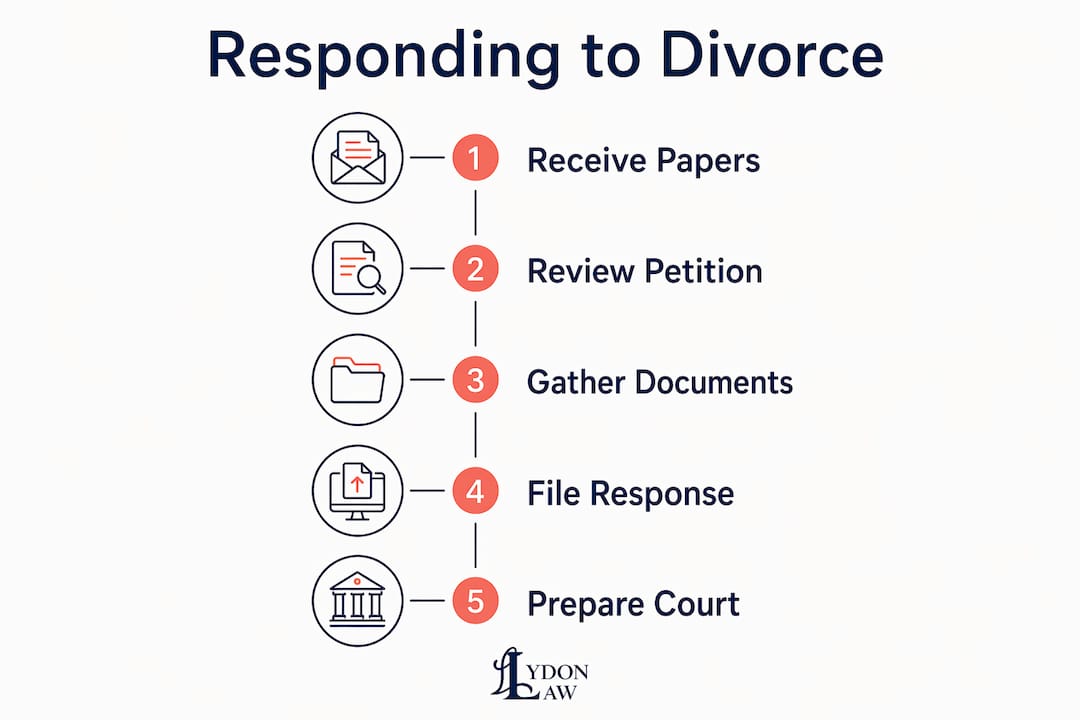
The 30-day response window is one of the most critical facts in the New Hampshire divorce process. The clock starts on the date you were served, not the date you opened the envelope or read the papers. Missing this deadline allows the petitioner to request a default divorce decree, meaning the court can grant the divorce and rule on property, support, and custody without hearing your side.
Your formal response begins with filing an Appearance form with the New Hampshire Family Division court. This document tells the court you intend to participate in the case. You may also file an Answer, which lets you respond to the specific claims made in the divorce petition and raise your own requests regarding property, support, or custody. Both forms are available through the New Hampshire Judicial Branch.
New Hampshire allows three methods of service: certified mail (approximately $8–$15), sheriff delivery ($25–$50), or a professional process server ($50–$100). If you filed a joint petition with your spouse, service is not required. Understanding which method was used helps you confirm your exact service date and calculate your deadline accurately.
Pro Tip: Read every page of the divorce petition before doing anything else. The petition contains the petitioner’s requests for property division, support, and custody. Knowing exactly what is being asked gives you and your attorney a clear starting point.
Organizing financial records immediately after being served is one of the most practical steps you can take. Your attorney needs accurate financial information to protect your assets, prepare your response, and advise you on property division and support. Waiting to gather these records slows down your case and limits your attorney’s ability to act quickly.
The financial documents you need include:
If you have minor children, school records, medical records, and childcare documentation are equally important. Organizing childcare and school records alongside financial affidavits directly supports your position in custody and support proceedings. New Hampshire family courts consider detailed records when evaluating parenting arrangements and child support calculations.
One critical warning: do not hide assets or drain joint accounts after being served. Hiding or dissipating assets violates court orders and damages your credibility with the judge. The legal penalties are serious and can affect every aspect of your case, from property division to support rulings.

Pro Tip: Make two copies of every document you gather. Keep one set at home and store the second set in a secure location your spouse cannot access. Note the date you accessed each account or record in case the timing becomes relevant later.
New Hampshire has specific requirements that apply as soon as a divorce case is filed, and compliance is not optional. Missing these obligations can delay your case and reflect poorly on you in court.
The First Appearance session is the first formal court event in your case. Attendance at the First Appearance is mandatory for both parties unless the court excuses you. This session sets the schedule for the rest of your case, including mediation sessions, case manager conferences, and temporary hearings on issues like child support or living arrangements. Missing it without court permission causes significant delays and is rarely excused.
For cases involving minor children, New Hampshire law adds another requirement: the Child Impact Program. Key facts about this program include:
Preparing for these appearances matters. Bring copies of your filed documents, a list of questions for your attorney, and any temporary orders already issued by the court. Dress professionally and arrive early. Courts notice preparation, and judges form impressions quickly.
Approximately 95% of New Hampshire divorces settle before trial through negotiation, mediation, or collaborative law. The First Appearance often leads directly to mediation scheduling. Mediation costs roughly $100–$300 per hour and typically runs two to four hours per session. Settling outside of trial reduces both cost and stress significantly.
The period immediately after being served is when many people make decisions that hurt their case. Knowing what to avoid is just as important as knowing what to do.
“Being served divorce papers is the beginning of a legal process, not the end of your options. Early consultation with an attorney is the single most effective step you can take to protect your rights.” — Legal experts consistently emphasize this point when advising clients who have just been served.
Managing your emotional state during this time is also practical, not just personal. Stress leads to reactive decisions. Staying organized, keeping a written log of key dates and communications, and leaning on trusted support people helps you stay focused on what matters legally. If domestic violence is a concern in your situation, Lydon has resources on handling domestic violence cases in NH that address safety planning alongside legal steps.
Responding to divorce papers in New Hampshire within 30 days is the single most important action you can take to protect your legal rights and preserve your voice in the proceedings.
| Point | Details |
|---|---|
| 30-day response deadline | File your Appearance form with the Family Division court before the deadline to avoid a default judgment. |
| Document organization | Gather bank statements, tax returns, property records, and child-related documents immediately after being served. |
| Child Impact Program | Both parents must complete this four-hour, $85 program within 45 days of service in cases involving minor children. |
| First Appearance attendance | This mandatory court session sets your case schedule; missing it without permission causes serious delays. |
| Avoid reactive mistakes | Do not hide assets, drain accounts, or delay consulting a family law attorney after being served. |
When clients come to me after being served, the first thing I notice is that most of them are focused on the emotional weight of the moment. That is completely understandable. But the legal clock does not pause for that. The 30-day deadline is the most unforgiving part of New Hampshire divorce law, and I have seen people lose significant ground simply because they waited too long to act.
What I tell every person in this situation is this: being served is not a verdict. It is a starting point. The petition your spouse filed is their opening position, not the final outcome. You have the right to respond, to present your own requests, and to negotiate terms that reflect your actual circumstances.
The clients who do best are the ones who treat the first week after service as a time for action, not reaction. They read the documents, gather their records, and call an attorney before making any financial moves. That combination of speed and organization consistently leads to better outcomes, whether the case settles in mediation or goes before a judge.
New Hampshire’s requirement that both parties attend the First Appearance and complete the Child Impact Program is actually a feature, not a burden. These steps create structure at a time when everything feels uncertain. They force both parties to engage with the process early, which tends to move cases toward resolution faster.
If you are considering whether divorce is your only option, Lydon also covers legal separation as an alternative for New Hampshire residents who are not ready to fully dissolve the marriage. That conversation is worth having with an attorney before your response deadline passes.
— Rich
Lydon is a boutique family law firm with offices in Nashua and Portsmouth, serving clients throughout New Hampshire. Attorney Kalie Lydon brings extensive courtroom experience, including appearances before the New Hampshire Supreme Court, and works directly with every client rather than passing cases between staff. If you have been served divorce papers, Lydon can review your documents, explain your rights, and help you file a timely, accurate response. The firm handles divorce, child custody, child support, and related family law matters with clear communication and practical guidance. Contact Lydon’s New Hampshire family law team to schedule a consultation and protect your rights before the deadline passes.
If you miss the 30-day deadline, the court can issue a default judgment granting the divorce and deciding property, support, and custody without your input.
You file an Appearance form and, if needed, an Answer form with the New Hampshire Family Division court. Both forms are available through the New Hampshire Judicial Branch, and filing must occur within 30 days of service.
The Child Impact Program is required only in divorces involving minor children. Both parents must complete the four-hour program within 45 days of the respondent being served, at a cost of approximately $85 per parent.
You can file your own response, but consulting a family law attorney before doing so is strongly advised. The decisions made in your initial response affect property division, support, and custody outcomes throughout the entire case.
The First Appearance is a mandatory court session in the New Hampshire Family Division that sets the schedule for your case, including mediation and temporary hearings. Missing it without court permission can significantly delay your proceedings.

© 2026 Lydon Law|Legal Disclaimer|Privacy Policy