Menu


TL;DR:
- Facing a domestic violence petition in New Hampshire involves short notice, high stakes, and rapid court processes.
- Building a strong defense requires collecting evidence, witnesses, and identifying inconsistencies in the petition.
- Legal guidance and timely action are crucial to protect rights, navigate hearings, and mitigate long-term consequences.
Imagine opening your front door and being handed a domestic violence petition. Your heart races. You don’t fully understand what it means, but you know your freedom, your relationship with your children, and your reputation are suddenly at risk. Facing a domestic violence accusation in New Hampshire is one of the most stressful legal situations a person can encounter. The timelines are short, the stakes are high, and the court process can feel overwhelming. This guide walks you through each step, from understanding the charges against you to protecting your rights, preparing your defense, and knowing what to do after your hearing.
| Point | Details |
|---|---|
| Act fast | Hearings happen quickly in NH, so rapid evidence gathering and legal help are critical. |
| Know your rights | Understanding NH domestic violence laws and protective orders helps you prepare an effective defense. |
| Gather solid evidence | Texts, witnesses, and records can make the difference in court outcomes. |
| Seek legal advice | A defense attorney can navigate the court process and protect you from common mistakes. |
With the stakes clear, the first step is understanding what you’re up against legally. New Hampshire’s domestic violence law is governed by RSA 173-B, which defines abuse as physical assault, threats, harassment, or stalking committed by a family or household member. That includes current or former spouses, people who share a child, and individuals who live or have lived together. Understanding this definition is critical because it shapes every element of your case.
When a petition is filed, a judge may issue a temporary protective order the same day, often without hearing your side first. This is called an ex parte order. It can remove you from your home, restrict contact with your children, and limit where you can go. A full hearing is then scheduled, typically within 3 to 5 days, where both sides can present their case. That timeline is very short, which means you need to start preparing immediately.
Here’s what protective orders can affect in your daily life:
If the order becomes permanent or you’re charged criminally, the consequences escalate. Under RSA 173-B, violations can be charged as a Class A misdemeanor, carrying up to one year in jail and fines up to $2,000.
| Order type | Duration | Who decides | Your input |
|---|---|---|---|
| Temporary (ex parte) | Until hearing | Judge alone | None initially |
| After hearing (temporary) | Up to 1 year | Judge after both sides | Yes |
| Permanent | Over 1 year | Judge after full hearing | Yes |
Note: Fighting a protective order requires showing there is no credible present threat and responding with timely, evidence-based arguments. Silence or delay works against you.
Familiarizing yourself with the legal process in NH and your rights under state law will help you make informed decisions at every stage.
Once you know the charges, you need to build your strongest factual defense. Many people facing a domestic violence petition make the mistake of simply denying the allegations. That’s rarely enough. What actually moves the needle in court is specific, verifiable evidence that contradicts the petitioner’s claims or demonstrates inconsistencies in their account.
Start by collecting texts, records, and witness statements as quickly as possible. Think about every form of communication you have with the petitioner: text threads, emails, social media messages, or voicemails. Look for timestamps, tone, and anything that contradicts the claims in the petition. Screenshots should be saved and backed up immediately.
Here is a step-by-step approach for organizing your defense materials:
Pro Tip: Focus on showing inconsistencies in the petition rather than simply denying what was claimed. Courts respond more favorably to specific, documented evidence than to general denials.
Not all evidence carries the same weight. This comparison can help you focus your efforts:
| Strong evidence | Weak evidence | |—|—|—| | Timestamped texts contradicting the claim | Vague character references | | Witness with direct knowledge of the event | Someone who wasn’t present | | Medical records showing no injury | Verbal-only denials | | Photos with location data and date stamps | Social media posts without context | | Call logs showing contact was mutual | Claims without documentation |
When handling your defense, having organized, well-documented materials makes a measurable difference in how your attorney can present your case.

With your evidence ready, here’s what you can expect from NH courts and your options for professional legal help. The New Hampshire court system moves fast in domestic violence cases. Once the temporary order is issued, your hearing date is set quickly. Missing a deadline or filing the wrong form can seriously harm your position.
The NH Courts self-help center provides forms and basic instructions for individuals who want to represent themselves. While those resources are available, they cannot replace the judgment and experience of an attorney who knows how courts interpret evidence and procedural rules.
Key forms and steps to address before your hearing:
Pro Tip: Double-check all paperwork for errors before submitting. An omission on a court form can delay your response or, worse, limit what you’re allowed to argue at the hearing.
Warning: Representing yourself at a domestic violence hearing is a high-stakes decision. Even small procedural errors or poorly framed arguments can lead to outcomes that follow you for years, including permanent orders, restrictions on parenting time, and a civil record that affects future legal matters.
As for hiring an attorney, you have options depending on your financial situation. If you cannot afford private counsel, you may qualify for a public defender if your case involves criminal charges. For civil protective order hearings, eligibility for a public defender is more limited, so understanding your defense rights and options early is essential.
After your hearing, what you do next can impact both your record and your day-to-day life. The judge may reach one of several outcomes: the petition is dismissed, a temporary order remains in place for a defined period, or a permanent order is issued. Each result carries different responsibilities and options.
If an order is issued, compliance prevents new charges and protects your ability to appeal or seek modification later. Compliance means strictly following every condition, including no contact requirements, staying away from specified locations, and surrendering firearms if required. Even indirect contact through a third party can be considered a violation.
Here are your immediate steps after a court decision:
You should seek further legal help if any of the following apply:
When defending criminal charges connected to a domestic violence case, early legal action protects more than just your freedom. It can preserve your parenting time, your housing, and your future opportunities.
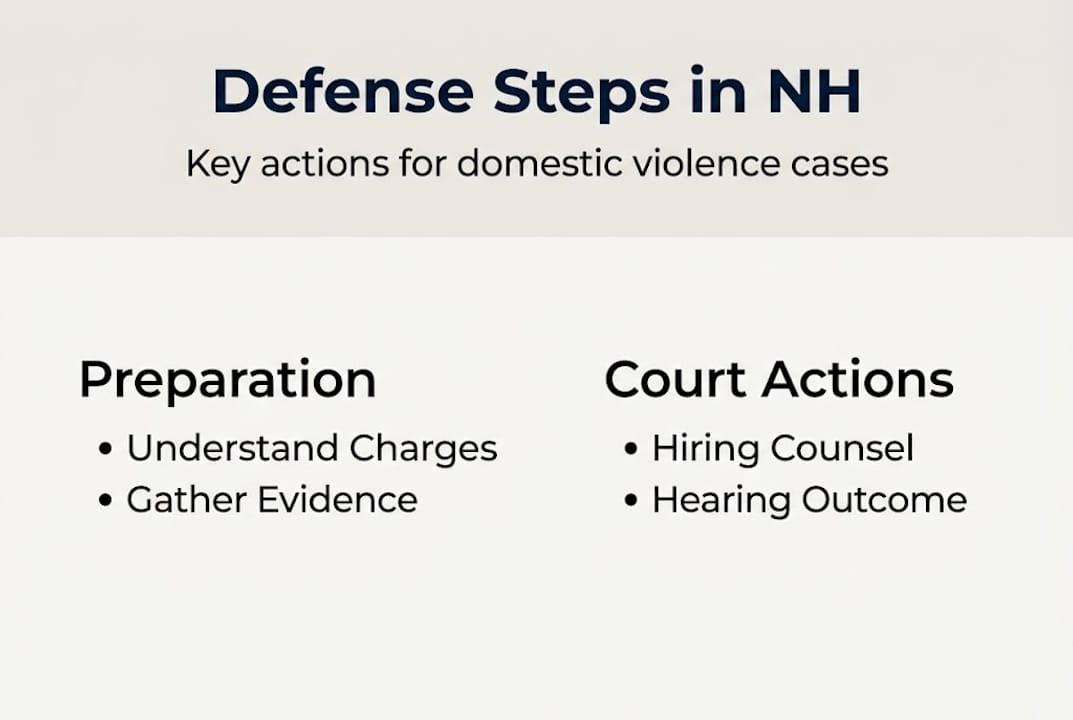
Having covered each step, it’s important to step back and share what experienced attorneys wish every person knew. The most common mistake is underestimating how serious a civil protective order really is. People assume that because it’s not a criminal conviction, it carries no lasting weight. That’s not accurate.
A civil finding can still affect child custody decisions, housing applications, and professional licensing. Violating an order, even unintentionally, can trigger criminal charges with real consequences. And waiting too long to act, hoping the situation resolves itself, almost always makes things worse.
Another frequent error is focusing entirely on being “right” instead of being strategic. Courts respond to evidence, procedure, and argument, not to who feels more wronged. Why a lawyer helps is simple: the system has rules, and knowing how to use those rules makes a real difference. Early legal intervention prevents what attorneys call collateral damage, things like lost parenting time, job loss from background check results, or housing complications from a protective order on your record.
Every step in this guide, from gathering evidence to preparing for court, is more effective when you have experienced legal support behind you. Timing is critical in domestic violence defense cases. The sooner you speak with a qualified attorney, the more options you have. At Lydon Law, our NH criminal defense lawyers and family law attorneys work directly with you throughout the process, providing clear, practical guidance tailored to your specific situation. We serve clients across New Hampshire from our offices in Nashua and Portsmouth. If you want to understand all of your legal options, contact Lydon Law today to schedule a consultation and take the first step toward protecting your rights.
You must prepare for a hearing typically within 3-5 days, so gather your evidence and seek legal counsel immediately after being served.
You may qualify for a public defender if criminal charges are involved, or you can access NH court self-help forms, though professional legal counsel is strongly recommended given the stakes.
Violating an order can result in arrest, separate criminal charges, and significantly increased penalties, so full compliance with orders from the moment they take effect is critical.
Not always. Some protective orders are resolved in civil court, but violations or certain findings can lead to Class A misdemeanor charges carrying up to one year in jail and fines up to $2,000.
Yes, you have the right to appeal, and you should act quickly by filing with the appropriate New Hampshire court for review of the decision.

© 2026 Lydon Law|Legal Disclaimer|Privacy Policy