Menu


TL;DR:
- Facing domestic violence allegations in New Hampshire requires understanding the specific charges and their relationships to different relationships. These charges include assault, threat, sexual assault, stalking, and protective order violations, each carrying distinct penalties and legal implications. Early legal counsel is crucial to navigate procedural complexities, prevent additional charges, and protect your rights effectively.
Facing domestic violence allegations in New Hampshire can feel overwhelming from the very first moment. The paperwork is confusing, the legal terms are unfamiliar, and the stakes could not be higher for your freedom, your family, and your future. One of the most critical things you can do right now is understand exactly what type of charge you are facing, because the charge type directly shapes your potential penalties, your defense strategy, and your long-term options. This article breaks down every major category of domestic violence charge in NH so you can approach your situation with clarity and take meaningful steps forward.
| Point | Details |
|---|---|
| Charge depends on relationship | Domestic violence charges in New Hampshire are triggered by the relationship to the alleged victim, not just the act itself. |
| Protective order violations are serious | Violating a restraining or protective order creates separate charges with automatic arrest and possible firearm seizure. |
| Charge type affects defense | Identifying your specific charge type early helps tailor your legal defense and anticipate court procedures. |
| Multiple charges possible | One incident can result in various domestic violence-related charges, especially if court orders are violated. |
| Seek legal guidance early | Securing expert legal help as soon as possible can protect your rights and improve your outcome. |
Before you can begin building any kind of response to your situation, you need to understand the legal framework behind domestic violence charges in New Hampshire. The term “domestic violence” is not a standalone crime in the state. Instead, it is a classification applied to certain existing crimes, such as assault, sexual assault, threatening, or stalking, when those crimes occur within a specific type of relationship.
The domestic violence law in NH focuses heavily on the connection between the accused and the alleged victim. New Hampshire law identifies several relationship types that qualify:
If your relationship with the alleged victim falls into any of these categories, the underlying criminal charge may carry a domestic violence designation. That designation triggers special court procedures, protective orders, enhanced penalties, and can affect custody arrangements or housing. Understanding this from the start is essential.
Pro Tip: When you receive your charging documents, look carefully for language like “domestic violence” or “DV” next to the specific offense. If you see it, the procedural rules for your case change significantly, and you should contact a lawyer immediately.
The relationship factor also affects how certain offenses are recorded. For example, under NH RSA 632-A:4, when a sexual assault conviction involves an intimate partner or family member, the conviction is recorded specifically as “sexual assault-domestic violence,” which carries lasting consequences for your record and future legal matters. Knowing the legal process for domestic violence cases in New Hampshire can also help you anticipate what to expect at each stage.
With the groundwork covered on who and what counts as domestic violence, here is a breakdown of the core charge types individuals can face in NH.
Assault and battery within a domestic relationship is the most commonly charged offense. This can range from simple assault, which is often a misdemeanor, up to aggravated felonious sexual assault depending on the conduct alleged. Even a push or a threat that causes fear of physical harm can qualify.
Threatening and harassment charges arise when the accused allegedly used words, gestures, or communications to put someone in fear of imminent harm. These charges can originate from texts, phone calls, or in-person confrontations, and they are particularly common in situations where a relationship has recently ended.
Sexual assault with a domestic violence designation is a serious category. As noted, NH RSA 632-A:4 specifies that when the victim and defendant share an intimate or familial relationship, a conviction is recorded as “sexual assault-domestic violence.” This carries both criminal penalties and permanent record implications.
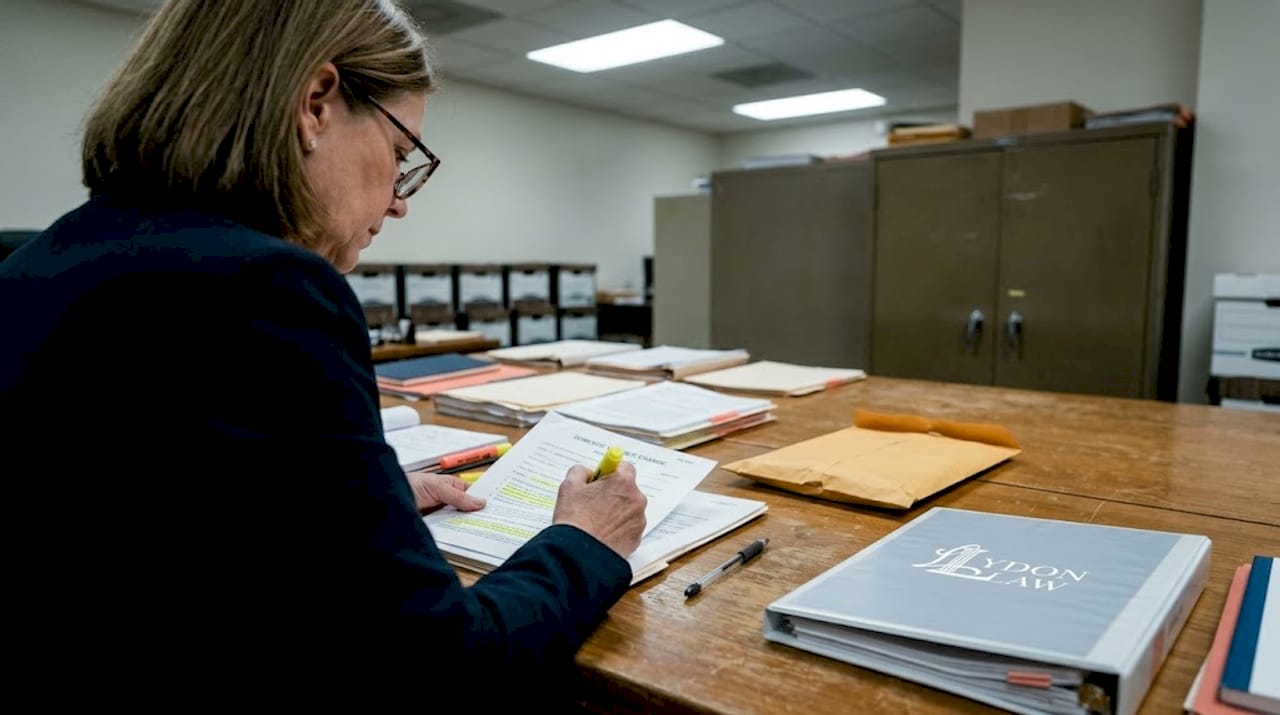
Stalking within a domestic context involves a repeated pattern of unwanted contact, surveillance, or communication that would cause a reasonable person to feel fear. When the alleged victim is a household member or intimate partner, it can become grounds for a domestic violence protective order and a separate criminal charge.
Violation of a protective or restraining order is its own criminal offense. Many people are surprised to learn that even if your original charge seems relatively minor, violating a court order issued in connection with a domestic matter is a separate and serious charge with its own penalties.
Understanding your domestic violence defense rights in New Hampshire is essential once you know which charge category applies to you. Each charge type requires a different defense approach, and handling domestic violence cases effectively starts with correctly identifying the specific allegations against you.
Besides basic assault or threatening, certain charges have extra procedures and penalties, especially stalking and order violations.
Stalking is often misunderstood. People assume it only involves physical following or surveillance. In reality, NH RSA 633:3-a defines stalking as engaging in a course of conduct targeted at a specific person that would cause a reasonable person to fear for their safety. That course of conduct can include repeated texts, showing up at a workplace, or monitoring someone through social media. When this conduct targets a household member or intimate partner, it becomes a basis for a domestic violence protective order and can result in criminal charges on its own.
Here are four critical things to understand about stalking and protective order violations:
“Knowingly violating a protective order is a Class A misdemeanor in New Hampshire, and the law includes mandatory arrest, detention, and firearm seizure provisions following arrest.” NH RSA 173-B:9
A Class A misdemeanor in New Hampshire carries potential penalties including up to one year in jail and fines of up to $2,000. It also results in a criminal record that can affect employment, housing, and child custody proceedings.
Pro Tip: If a protective order has been issued in your case, read it carefully and make sure you understand every condition it imposes. If any part of it is unclear, ask your attorney before you act. A single unintentional contact could result in a new criminal charge that is separate from your original case.
Knowing your options for defending against domestic violence charges and understanding the broader domestic violence protections guide for New Hampshire will help you see both sides of the legal picture clearly.
To summarize how these charges stack up, here is a side-by-side table of their characteristics and likely outcomes.
| Charge type | Classification | Potential penalty | Key consequences |
|---|---|---|---|
| Simple assault (domestic) | Class A misdemeanor | Up to 1 year jail, $2,000 fine | Criminal record, no-contact order |
| Aggravated assault (domestic) | Class B or A felony | 3.5 to 15 years prison | Loss of firearm rights, custody impact |
| Threatening/harassment (domestic) | Misdemeanor | Up to 1 year jail, fines | Protective order, record consequences |
| Sexual assault (domestic) | Felony | Up to 20 years or more | Sex offender registration, DV record notation |
| Stalking (domestic context) | Class B felony (repeat) | Up to 7 years prison | Protective order, criminal record |
| Protective order violation | Class A misdemeanor | Up to 1 year jail, fines | Mandatory arrest, firearm seizure |
As NH RSA 173-B:9 makes clear, protective order violations come with mandatory arrest authority and firearm seizure duties for law enforcement. This is not discretionary. Once the order exists and you are accused of violating it, the legal machinery moves quickly.
Several charge types also carry mandatory treatment program requirements. Courts frequently impose batterer intervention programs, counseling requirements, or substance abuse evaluations as conditions of sentencing or probation. These can affect your schedule, your finances, and even your employment. Understanding the evidence in domestic violence cases can help you and your attorney assess what the prosecution is likely to present and where your defense has the most leverage.
After seeing these charge types and penalties side by side, here is how to pinpoint which charge applies to your situation.
Under NH RSA 173-B:9, once a protective order is in place, any violation creates an entirely new criminal charge separate from the original allegation. This is a critical procedural nuance that many people do not realize until it is too late.
Hiring a domestic violence attorney in New Hampshire as early as possible gives you the best chance to understand your specific charges, protect your procedural rights, and make informed decisions about every step ahead.
From our experience working with clients facing these situations, the most common and costly mistake is underestimating how quickly a case can multiply in complexity. Someone comes in thinking they have a single misdemeanor assault charge and then discovers that an old protective order from a previous dispute is still active. One phone call to the alleged victim, made without thinking, suddenly means they are facing a second charge for a protective order violation. Two charges instead of one. Different penalties. Different procedural timelines.
Most articles on this subject stop at listing the charge types. What they do not tell you is that the procedural shifts in a domestic violence case often happen faster than people expect, and each shift creates new risks. Stalking charges can be added mid-case if new conduct comes to light. Order violations can be alleged weeks after the original incident. What looked like a manageable situation at the start can become significantly more serious through no dramatic new event, just a procedural development that was never anticipated.
Another thing people consistently underestimate is the timing of legal representation. Many individuals wait until they receive a court date before they contact an attorney. By that point, critical deadlines for evidence preservation, hearings on protective orders, and bail conditions may already have passed. Securing counsel the moment you are served with any paperwork is not overcautious. It is the single most practical step you can take to preserve your options.
Selecting defense counsel who has direct experience with New Hampshire’s specific domestic violence statutes and court procedures matters more than people realize. The procedural details in these cases are not minor technicalities. They are often where cases are won or lost.
If you are facing domestic violence charges in New Hampshire, you deserve clear, experienced legal guidance from the very beginning. At Lydon Law, we work directly with each client throughout every stage of the case. You will work with your attorney, not a paralegal or a case manager, from your first consultation through resolution. Our NH criminal defense attorneys understand how domestic violence charges interact with family law guidance matters like custody and protective orders, which means we can help you see the full picture of your situation. Whether you are facing a misdemeanor assault charge or a more serious felony, we are here to help you understand your criminal defense options and take the most informed steps forward. Contact Lydon Law today to schedule a consultation.
Yes, New Hampshire law adds a domestic violence classification depending on the relationship between the people involved. For example, NH RSA 632-A:4 provides that when a sexual assault conviction involves an intimate partner or family member, it is specifically recorded as “sexual assault-domestic violence.”
Violating a protective order is a Class A misdemeanor under NH RSA 173-B:9, carrying mandatory arrest, possible detention, and required firearm seizure by law enforcement.
No, stalking qualifies as a domestic violence matter only when the alleged victim is a household member, family member, or someone in an intimate relationship with the accused, as described under NH RSA 633:3-a.
Yes, it is entirely possible to face both an assault charge and a protective order violation charge arising from the same incident or timeframe, since each is treated as a separate criminal offense under New Hampshire law.
An attorney helps you identify the specific charge you are facing, understand critical court deadlines, and avoid procedural mistakes that could limit your defense options or result in additional charges.

© 2026 Lydon Law|Legal Disclaimer|Privacy Policy