Menu


TL;DR:
- Criminal charges in New Hampshire are classified into violations, misdemeanors, and felonies, each with distinct penalties and court jurisdictions.
- Understanding these classifications and the court process helps defendants effectively navigate arraignment, plea negotiations, and potential record annulment.
Criminal charges in New Hampshire are formal legal accusations that allege a person violated state law, triggering a court process that can affect your freedom, employment, and future. These charges fall into three main categories under New Hampshire law: violations, misdemeanors, and felonies, each carrying distinct penalties and handled by different courts. Whether you are facing a first-time offense or a serious felony, understanding how the system works gives you a meaningful advantage. This article explains the classification of charges in New Hampshire, the court process from arrest to sentencing, your legal rights, and options like record annulment that may be available to you.
Criminal charges in New Hampshire are governed primarily by RSA 625:9, which establishes the classification system for all offenses. Violations are the least serious category and carry no jail time, only fines. Class B misdemeanors carry up to 12 months of supervision but no incarceration. Class A misdemeanors carry up to one year in jail. Felonies are divided into Class B felonies, punishable by up to seven years in state prison, and Class A felonies, which carry sentences of up to 15 years or more depending on the specific offense.
The civil vs. criminal law distinction matters here because criminal charges are brought by the state, not by a private party. The government bears the burden of proving guilt beyond a reasonable doubt, the highest legal standard in the American court system. That standard is your most important protection, and every defense strategy builds from it.
Named entities central to this system include the New Hampshire Circuit Court, the New Hampshire Superior Court, and the statutory framework under RSA Title LXII. Knowing which court handles your charge, and why, shapes every decision you make from the moment of arrest.
New Hampshire uses a two-court structure for criminal matters. The Circuit Court District Division handles misdemeanors, violations, and civil claims up to $25,000. The Superior Court handles all felony prosecutions. This division is not procedural preference. It is a strict jurisdictional rule under RSA 601:1 that determines where your case is heard and what procedural rights apply.

The process for a felony charge follows a defined sequence. After arrest, you appear in Circuit Court for arraignment, where charges are formally read and bail is set. A probable cause hearing follows to determine whether sufficient evidence exists to proceed. If the court finds probable cause, the case is bound over to Superior Court. For Class A felonies, a grand jury must return an indictment before the case proceeds to trial. If no plea agreement is reached, defendants have the right to a jury trial with 12 jurors in Superior Court, protected under New Hampshire Constitution Article 15.
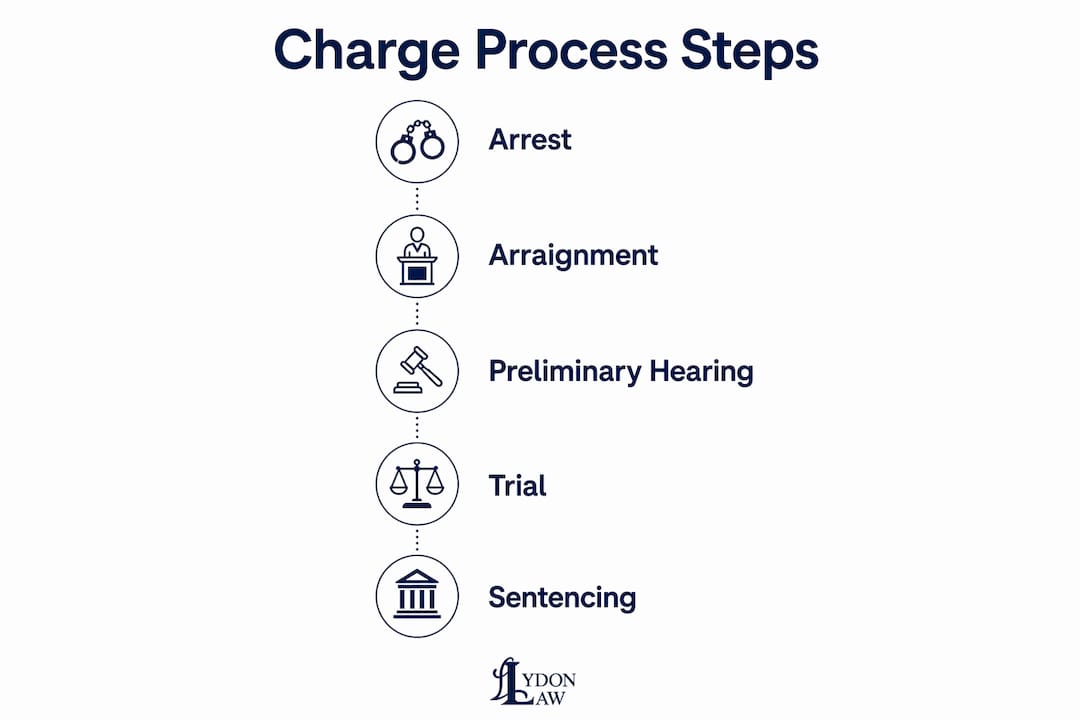
Misdemeanor cases move more quickly. They are resolved entirely within Circuit Court, often through a single arraignment and subsequent hearing. Police may issue a summons in lieu of arrest for misdemeanors unless specific circumstances prohibit it, such as a risk of flight or public safety concern. Arrest warrants require sworn complaints establishing probable cause.
| Court | Offense type | Key procedures |
|---|---|---|
| Circuit Court (District Division) | Misdemeanors, violations | Arraignment, bail, bench trials, summons |
| Superior Court | Felonies (Class A and B) | Grand jury indictment (Class A), jury trials, plea negotiations |
Pro Tip: If you are unsure which court is handling your case, the charge classification on your arrest paperwork or summons will tell you. Class A or B felony means Superior Court. Anything labeled misdemeanor or violation stays in Circuit Court.
Your right to legal representation begins at the moment of arrest. New Hampshire courts appoint counsel for defendants who cannot afford private representation, with eligibility determined by comparing your financial resources against the cost of hiring a private attorney under RSA 604-A:2. Courts may use wage data as a verification tool, but this does not change the legal standard for appointment. If you qualify, you will be assigned a public defender or assigned counsel.
Prompt representation matters more than most people realize. The decisions made at arraignment, including bail conditions and initial plea, set the tone for everything that follows. Timely legal counsel reduces the risk of waiving rights unintentionally or agreeing to conditions that complicate your defense later.
Common defense strategies in New Hampshire criminal cases include the following approaches:
Understanding how to defend criminal charges in New Hampshire requires knowledge of both state statutes and local court practices. What works in one jurisdiction may not apply in another, which is why local experience matters.
Pro Tip: Do not speak to law enforcement without an attorney present. Anything you say before counsel is appointed can be used against you, and early statements are among the most common sources of self-incrimination in NH criminal cases.
Sentencing in New Hampshire is governed by RSA Chapter 651, which sets caps for each offense class. Beyond incarceration, courts have broad authority to impose probation, fines, community service, and treatment programs. Understanding the difference between probation and parole is critical because they operate under entirely separate legal frameworks.
Probation is court-imposed supervision that serves as an alternative to, or follows, incarceration. The court sets the conditions and duration. Parole is a conditional release from prison administered by the New Hampshire Adult Parole Board under RSA 651-A. You do not earn parole automatically. The Parole Board reviews your case and sets conditions for supervised release.
| Feature | Probation | Parole |
|---|---|---|
| Who imposes it | Sentencing court | Adult Parole Board |
| Governing statute | RSA Chapter 651 | RSA 651-A |
| When it applies | Instead of or after incarceration | After serving part of a prison sentence |
| Supervision authority | Probation officer under RSA 504-A | Parole officer under RSA 651-A |
| Violation consequences | Revocation hearing in court | Parole Board revocation hearing |
Both probation and parole officers hold warrantless arrest authority under RSA 504-A:4 when a supervisee commits a new offense or poses a safety risk. This is a point many people on supervision do not fully appreciate. A single violation can result in immediate arrest and a return to incarceration without the procedural steps of a standard arrest.
Probation conditions typically include regular check-ins, restrictions on travel, prohibitions on contact with certain individuals, and requirements to maintain employment or attend treatment. Early termination of probation is possible when a defendant demonstrates consistent compliance and the court agrees the supervision is no longer necessary.
Annulment is New Hampshire’s official term for what most people call expungement. Under RSA 651:5, annulment seals your criminal record from public view, allowing you to legally state in most contexts that you were not convicted of the offense. This is not the same as erasing the record entirely. Law enforcement and certain licensing boards retain access.
Key facts about annulment in New Hampshire:
The annulment process is one of the most underused tools available to people with prior convictions in New Hampshire. Many eligible individuals never pursue it simply because they do not know it exists.
Criminal charges in New Hampshire follow a structured classification and court process, and knowing that structure, from arraignment through sentencing and annulment eligibility, is the foundation of any effective defense.
| Point | Details |
|---|---|
| Charge classification determines the court | Misdemeanors stay in Circuit Court; felonies move to Superior Court after probable cause. |
| Grand jury indictment is required for Class A felonies | The prosecution must secure an indictment before a Class A felony proceeds to trial. |
| Probation and parole are legally distinct | Probation is court-imposed; parole is administered by the Adult Parole Board under RSA 651-A. |
| Annulment eligibility has waiting periods | Waiting periods range from one year for violations to ten years for Class A felonies. |
| Appointed counsel is a protected right | Income-based eligibility under RSA 604-A:2 ensures defendants who cannot afford counsel are represented. |
After working with clients across New Hampshire courts, from Circuit Court arraignments in Nashua to Superior Court trials in Rockingham County, one pattern stands out clearly. The people who fare best are the ones who sought legal counsel before they thought they needed it.
Most people assume that minor charges do not require serious attention. A Class A misdemeanor sounds manageable until you realize it carries up to a year in jail, appears on background checks, and can affect professional licensing. The charge classification on a piece of paper does not reflect the real-world weight of a conviction.
I also see clients who did not know about annulment until years after they were eligible. That gap costs them jobs, housing applications, and opportunities they never pursued because they assumed their record was permanent. It is not always permanent. But you have to know the rules to use them.
The probation and parole distinction is another area where misunderstanding creates real harm. Clients on probation sometimes assume they have the same flexibility as someone who has simply paid a fine. They do not. A probation officer’s warrantless arrest authority is real, and a single misstep can undo a case outcome that took months to negotiate.
New Hampshire’s criminal system is structured and, in many ways, fair. But it rewards preparation and penalizes passivity. The earlier you understand what you are facing, the more options you have.
— Rich
Facing criminal charges is stressful, and the stakes are real. Lydon Law provides criminal defense representation throughout New Hampshire, with offices in Nashua and Portsmouth. Attorney Kalie Lydon brings direct courtroom experience in New Hampshire courts, including the state’s Supreme Court, and works personally with every client from the first consultation through resolution. Whether you are dealing with a misdemeanor charge, a felony prosecution, or exploring annulment eligibility after a prior conviction, Lydon Law offers clear guidance and practical strategy. You work directly with your attorney, not support staff. Contact Lydon today to discuss your situation and understand your options.
New Hampshire criminal charges are classified as violations, Class A or B misdemeanors, and Class A or B felonies under RSA 625:9. Each category carries different penalties, from fines for violations to up to 15 years or more in prison for Class A felonies.
The New Hampshire Superior Court handles all felony prosecutions after a probable cause determination in Circuit Court. Class A felonies require a grand jury indictment before proceeding to trial.
Yes. Under RSA 604-A:2, New Hampshire courts appoint counsel for defendants who cannot afford private representation, with eligibility assessed by comparing your financial resources to the cost of private counsel.
Probation is imposed by the sentencing court as an alternative to or following incarceration, while parole is a conditional release from prison administered by the New Hampshire Adult Parole Board under RSA 651-A.
Yes, through annulment under RSA 651:5. Waiting periods range from one year for violations to ten years for Class A felonies, and certain offenses including violent crimes are ineligible. Dismissed or acquitted charges from cases after January 1, 2019, are automatically annulled after 30 days.

© 2026 Lydon Law|Legal Disclaimer|Privacy Policy